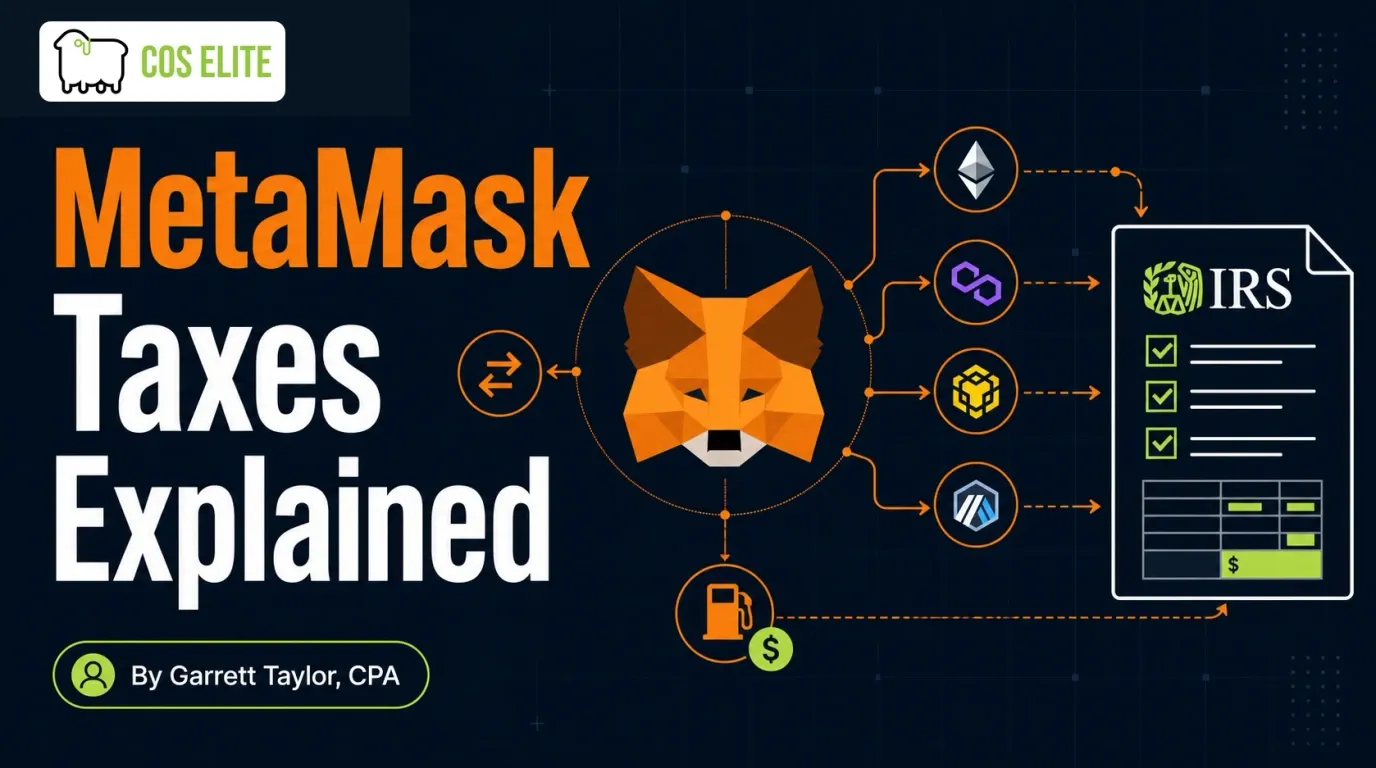
MetaMask has become one of the most widely used self-custody wallets for Ethereum and EVM-compatible blockchains. It gives you direct access to decentralized exchanges, staking platforms, NFT marketplaces, lending protocols, and cross-chain bridges. That flexibility is powerful, but it also creates a tax reporting challenge.
Unlike centralized exchanges, MetaMask does not generate a complete tax report or calculate your gains and losses. Every swap, bridge, NFT purchase, liquidity pool interaction, and token transfer must be reviewed to determine whether it creates a taxable event under current IRS guidance.
If your wallet history spans multiple years, chains, and DeFi protocols, accurate reporting often requires more than exporting transactions into tax software. It requires transaction-level review and complete reconciliation across your wallets and exchanges.
Does MetaMask Report to the IRS?
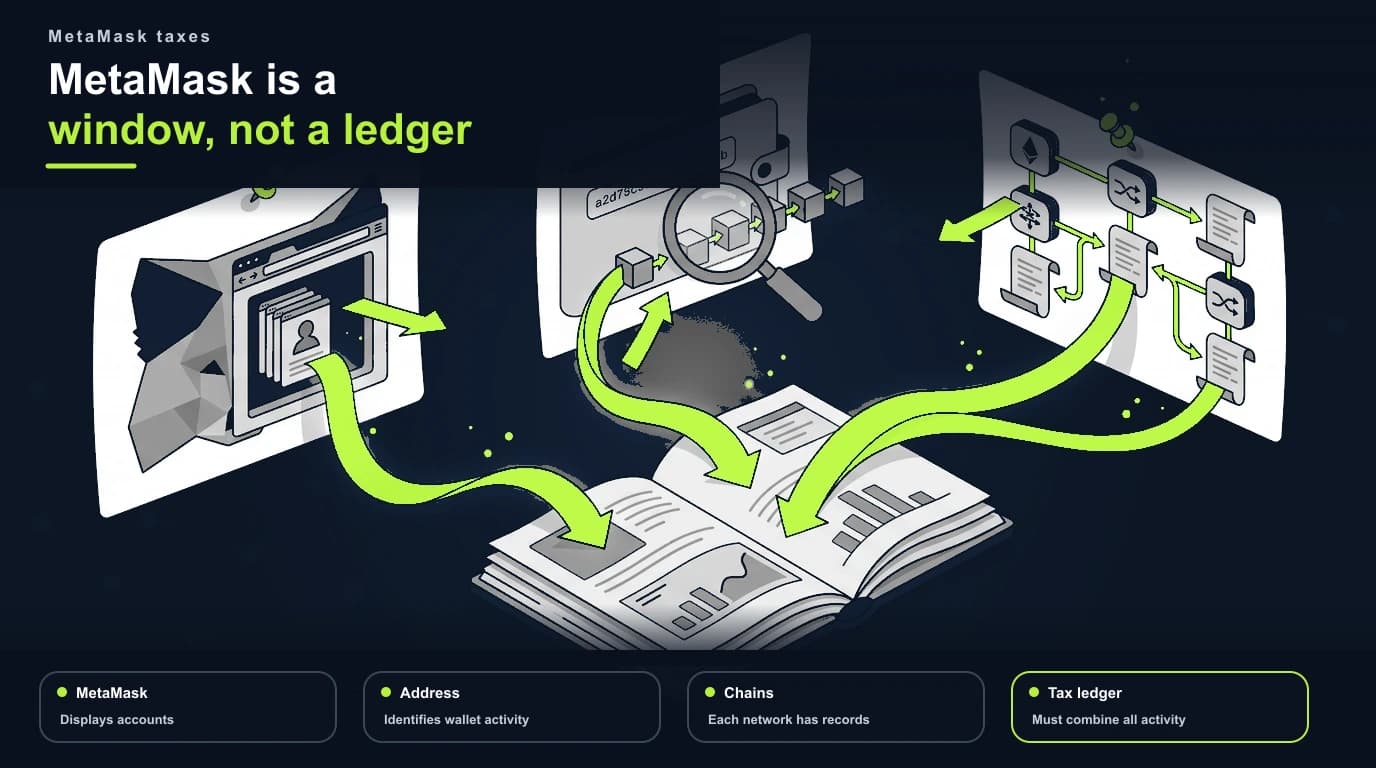
MetaMask is a non-custodial wallet. It does not hold your assets, issue Form 1099s, or automatically report your transactions to the IRS.
That does not mean your activity is invisible.
Many transactions eventually connect to centralized exchanges that may issue tax forms. In addition, blockchain transactions are permanently recorded on public ledgers, making it possible to reconstruct wallet activity when needed.
As a taxpayer, you remain responsible for accurately reporting:
- Capital gains and losses
- Crypto income
- NFT transactions
- DeFi income
- Any taxable disposal of digital assets
What MetaMask Transactions Are Taxable?
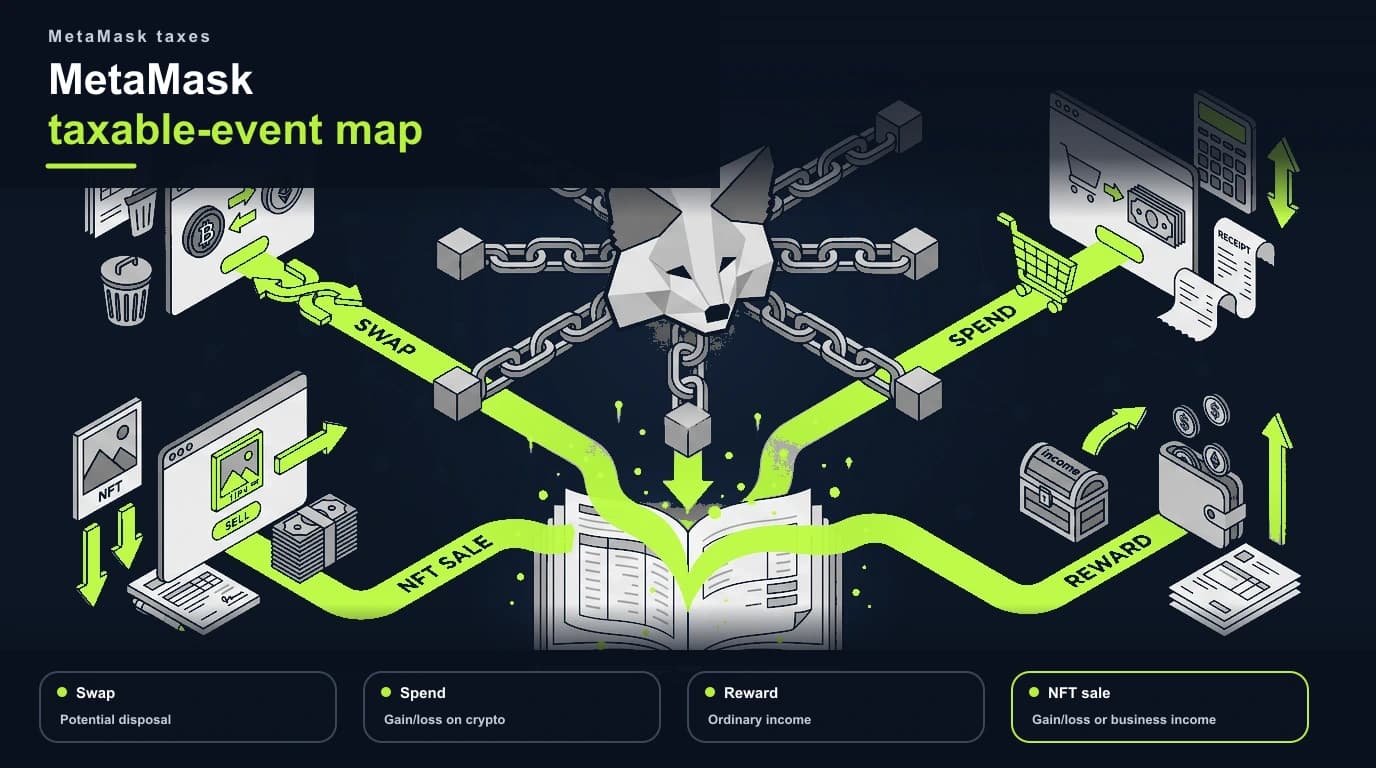
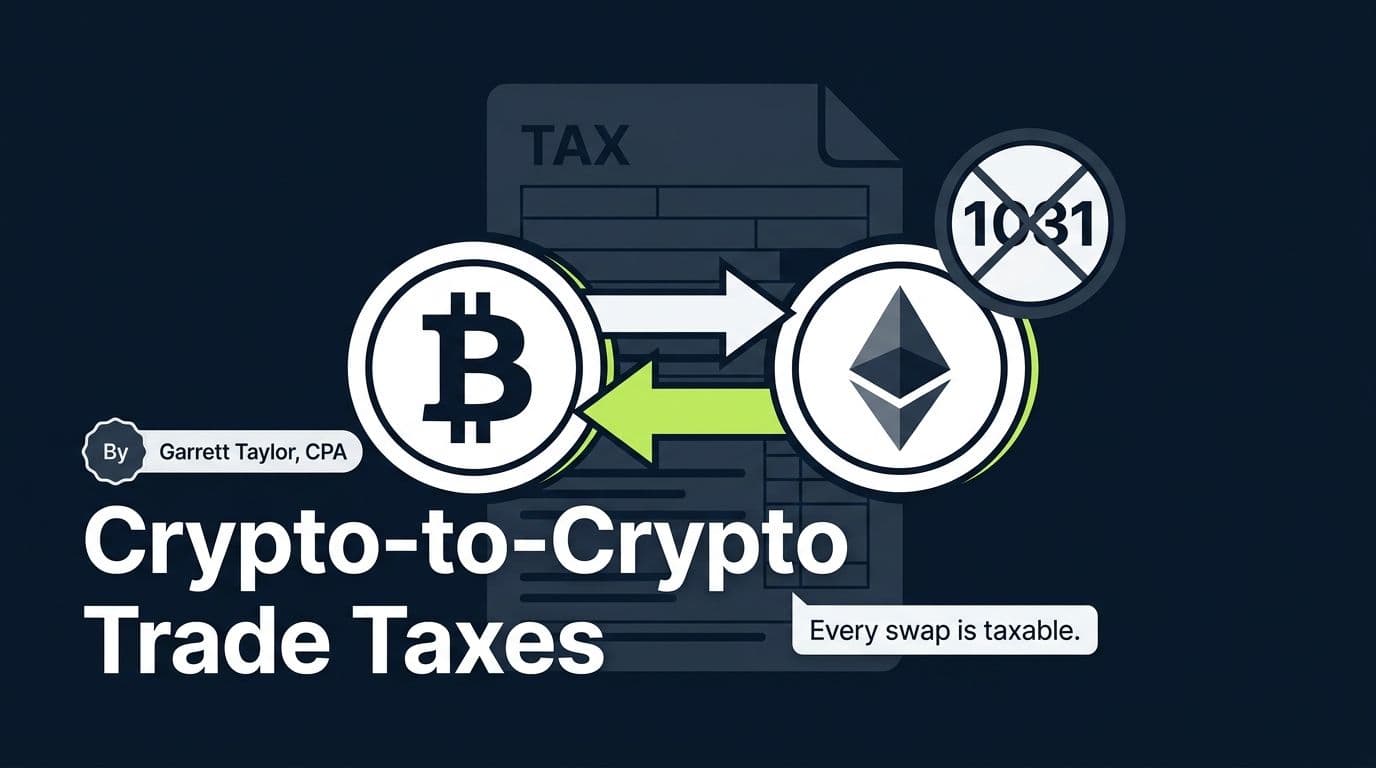
Not every action inside MetaMask has the same tax treatment, but several common activities can create taxable events under current IRS guidance. Swapping one cryptocurrency for another is generally considered a taxable disposal because you are exchanging one digital asset for a different one, even if no U.S. dollars are involved.
Selling cryptocurrency for cash also triggers a capital gain or loss based on your original cost basis and the value at the time of sale. In addition, certain crypto received through your wallet may be treated as ordinary income when received.
This commonly includes staking rewards, validator rewards, some airdrops, DAO compensation, and payments for goods or services. NFT transactions can also generate tax consequences, including purchasing NFTs with appreciated cryptocurrency, selling NFTs, or receiving creator royalties, depending on the nature of the transaction.
How DeFi Activity Complicates MetaMask Taxes
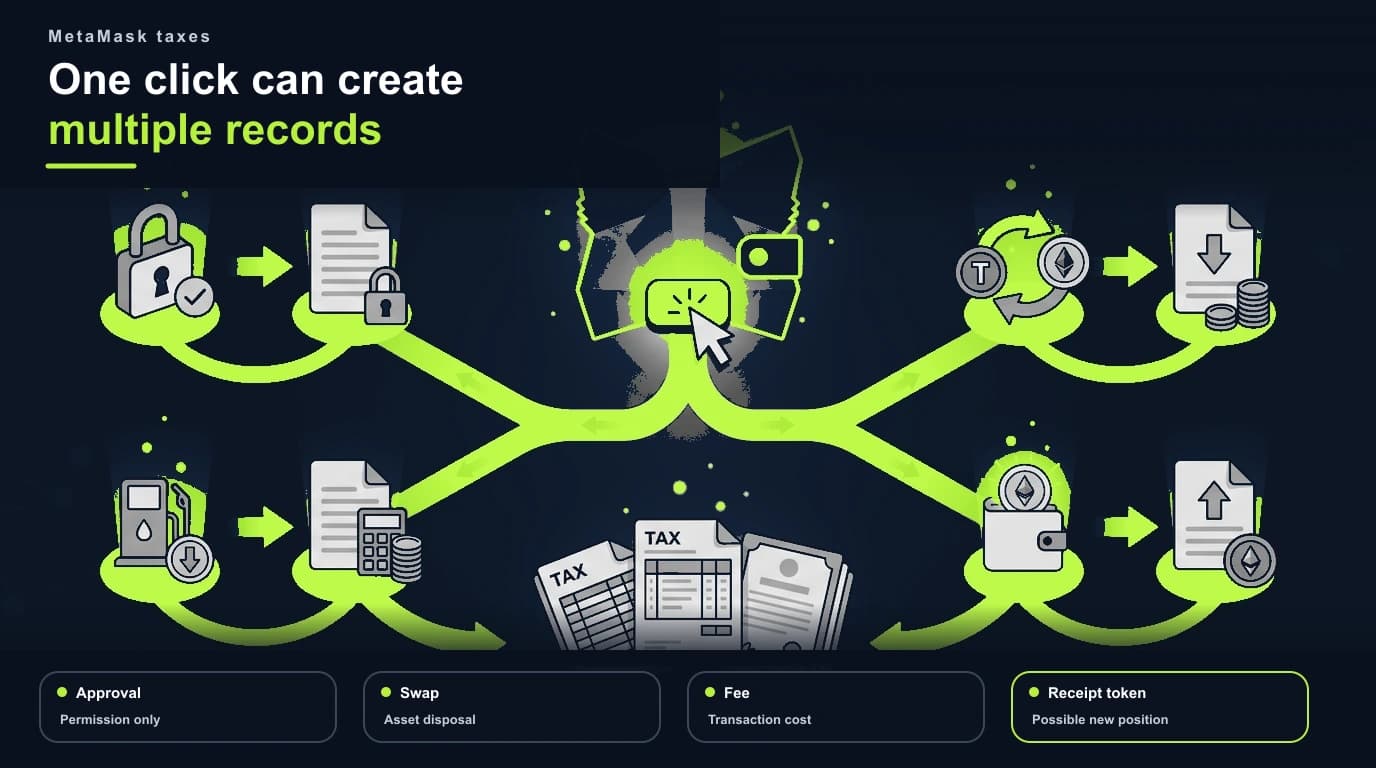
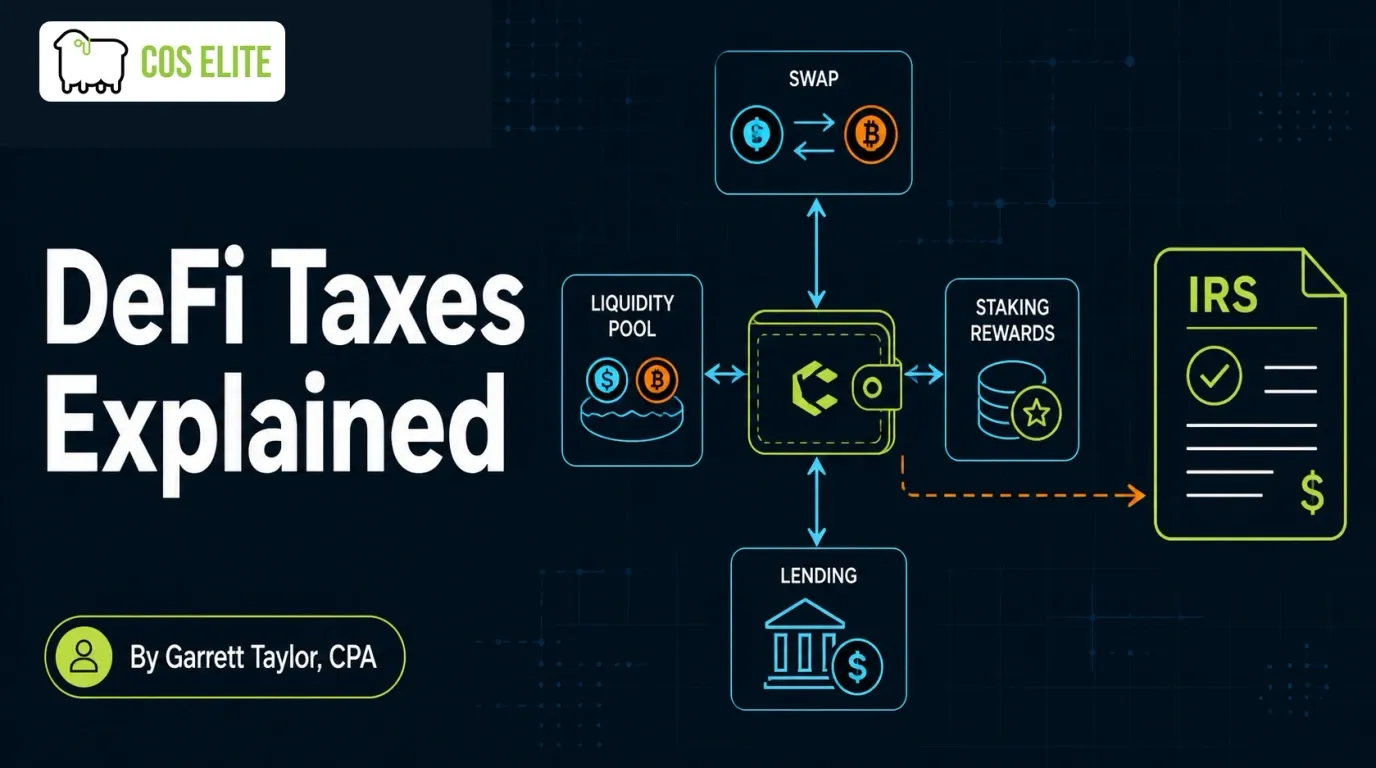
MetaMask serves as the gateway to thousands of DeFi protocols, making tax reporting much more complex than traditional crypto trading. Activities such as providing liquidity, yield farming, lending, borrowing, liquid staking, restaking, governance participation, and interacting with wrapped assets often involve multiple blockchain transactions that occur as part of a single user action.
Determining the correct tax treatment requires evaluating the economic substance of each transaction rather than relying solely on blockchain data. For example, withdrawing funds from a liquidity pool may involve a return of your original assets, trading fees, and reward tokens, each of which may be taxed differently. Because these transactions rarely fit neatly into standard tax software categories, they often require manual review before they can be accurately reported.
How Gas Fees Affect Your Taxes
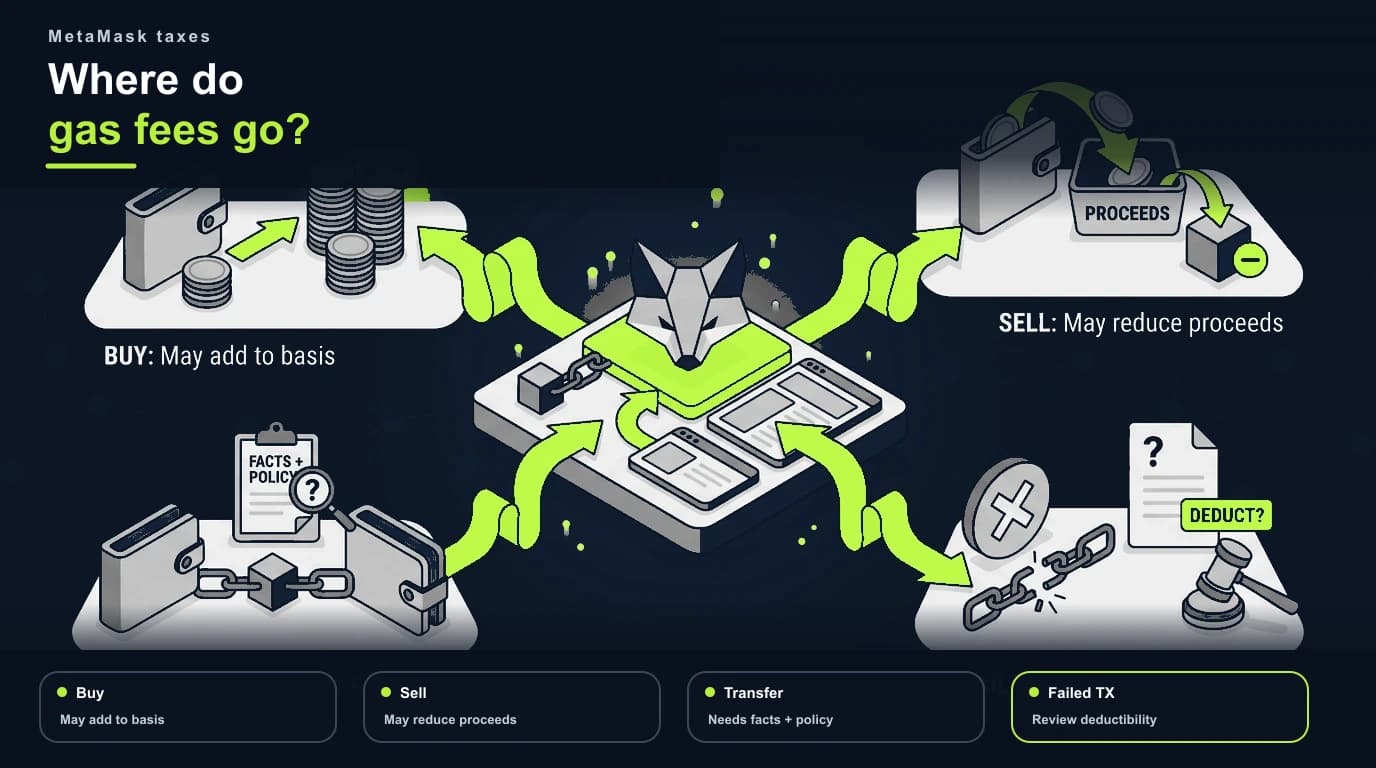
Gas fees are an unavoidable part of using MetaMask, but their tax treatment depends on why they were incurred. In some situations, gas fees paid to acquire cryptocurrency or NFTs may become part of the asset's cost basis, while fees associated with selling assets may reduce the proceeds used to calculate your capital gain or loss.
Other blockchain transaction fees may simply be treated as transaction costs without directly affecting your taxable income. Since active wallet users can generate hundreds or even thousands of gas fee transactions each year, applying the correct tax treatment consistently is essential for maintaining accurate records and preparing an accurate crypto tax return.
Cross-Chain Bridges Create Reconciliation Challenges
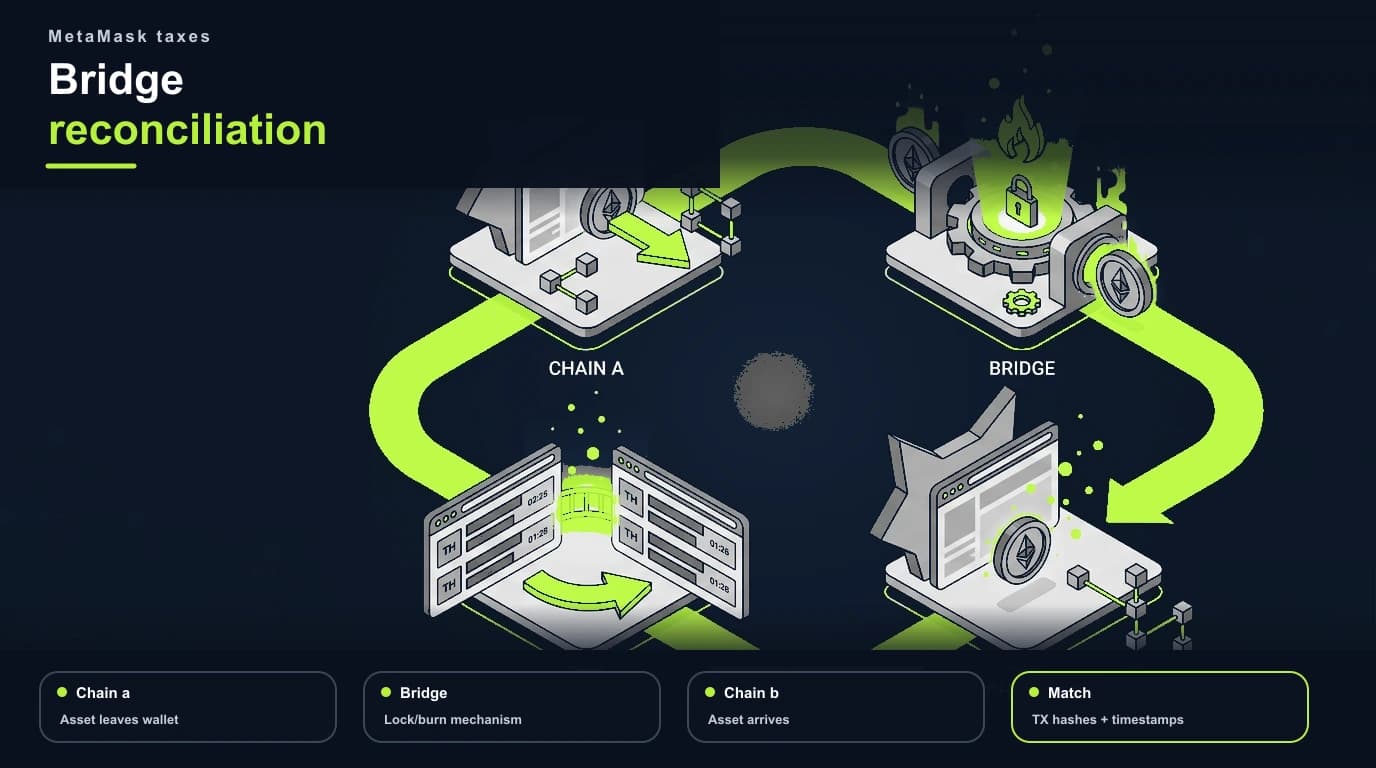
Bridging assets between Ethereum, Base, Arbitrum, Optimism, Polygon, or other supported networks creates another common reporting issue.
Although you may still own the same economic position, blockchain records often show:
- Tokens leaving one chain
- Wrapped assets arriving on another
- Multiple intermediary transactions
- Bridge fees
Without proper reconciliation, software may incorrectly classify these movements as taxable sales instead of transfers between wallets you control.
Can You Export a MetaMask Tax Report?
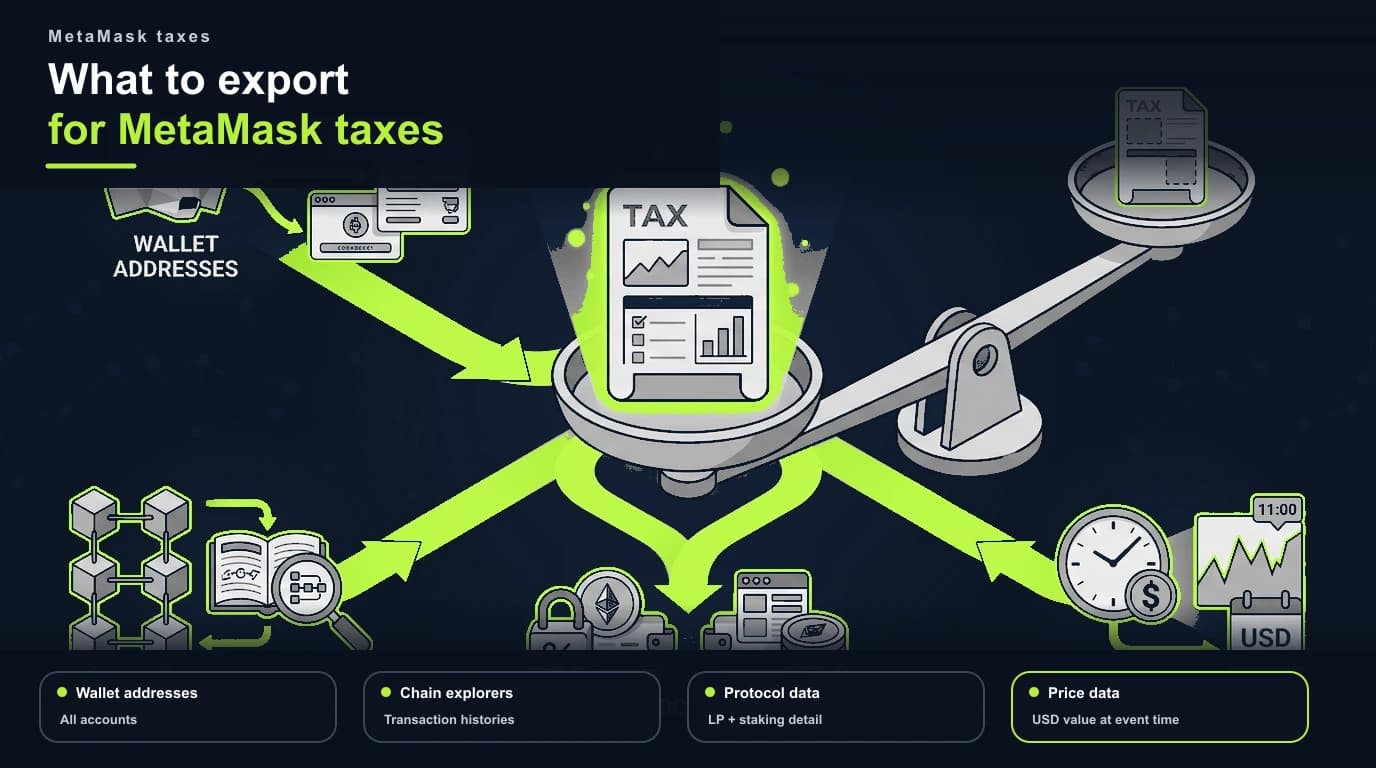
MetaMask itself does not generate a complete IRS-ready tax report because it functions as a self-custody wallet rather than a tax reporting platform. Instead, users typically gather transaction history through blockchain explorers, connected tax software, API integrations, or CSV exports from supported services.
While these tools can collect transaction data, the exported information often requires additional review before it is suitable for tax filing. Missing transactions, duplicate imports, unsupported DeFi activity, wallet transfers, token migrations, and incomplete cost basis records can all create reporting errors that need to be identified and corrected during the reconciliation process.
Why Cost Basis Often Breaks in MetaMask
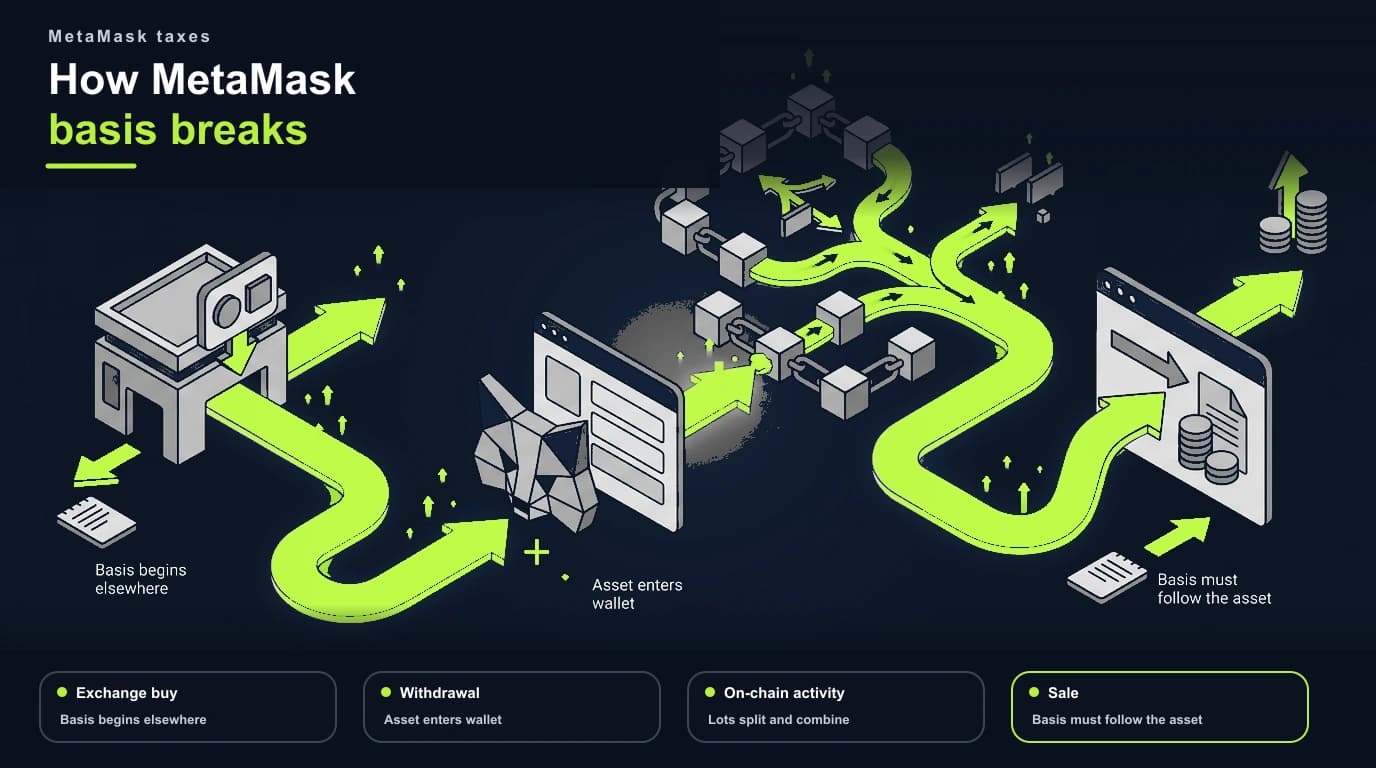
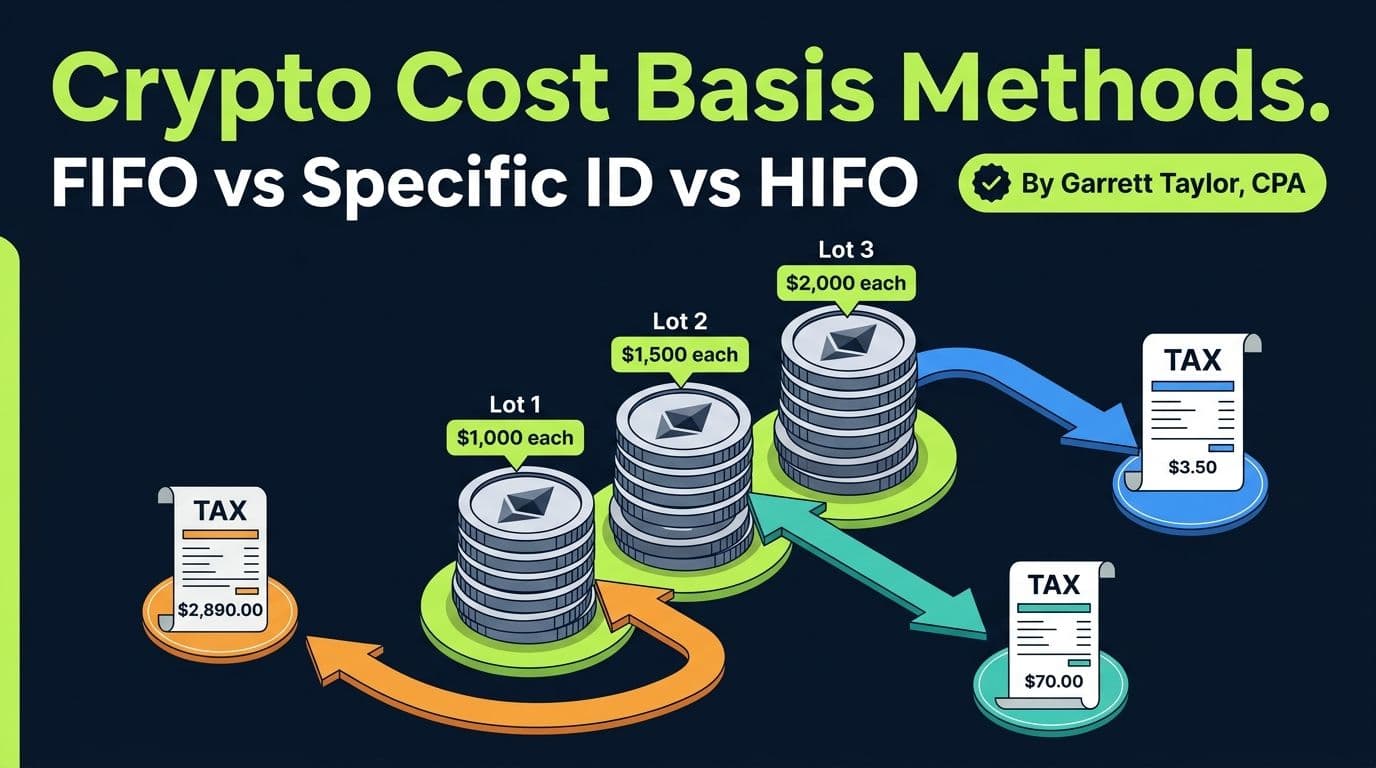
Maintaining an accurate cost basis becomes increasingly difficult as crypto activity spreads across multiple exchanges, wallets, and blockchain networks. Many investors purchase assets on centralized exchanges before transferring them into MetaMask, then later bridge those assets across chains, swap tokens through decentralized protocols, or move funds between several self-custody wallets.
If those transfers are not properly connected, the original acquisition history can become fragmented, causing software to lose track of purchase prices and holding periods. Missing exchange records, delisted tokens, wallet migrations, and incomplete historical data only add to the challenge. When this information cannot be reconstructed, tax software may incorrectly assume a zero cost basis, significantly overstating taxable gains that were never actually realized.
How COS Elite Reconciles MetaMask Activity
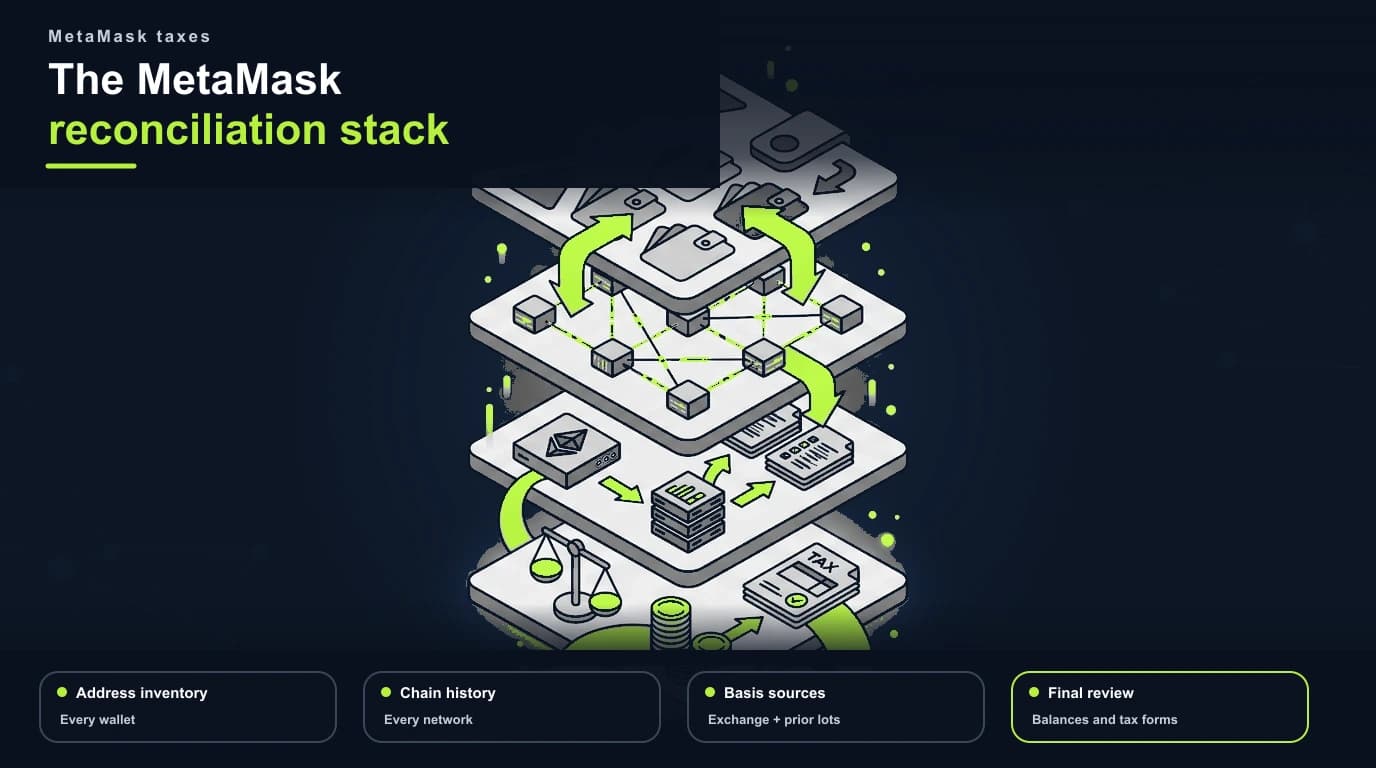
MetaMask tax reporting rarely involves a single wallet.
Our process begins by reviewing every connected exchange account, self-custody wallet, and blockchain network involved in your transaction history.
We then reconstruct complete transaction records, identify wallet-to-wallet transfers, classify DeFi activity, verify cost basis across every disposal, and resolve missing or inconsistent blockchain data before anything reaches your tax return.
When needed, we also perform full Digital Asset Reconciliation to rebuild fragmented transaction histories spanning multiple years, exchanges, and wallets before preparing your return.
For clients with significant on-chain activity, this process often identifies reporting errors that generic software either misses or classifies incorrectly.
When Should You Get Professional Help?
A simple wallet with occasional transfers may be manageable using tax software.
Professional review becomes much more valuable if you have:
- Multiple MetaMask wallets
- Several years of trading history
- Cross-chain bridge activity
- Liquidity pools
- Yield farming
- NFT transactions
- Missing cost basis
- Large realized gains
- IRS notices
- Thousands of transactions
The more complex your wallet history becomes, the greater the importance of transaction-level reconciliation before filing.
Need Help Reporting MetaMask Transactions?
MetaMask gives you complete control over your digital assets, but that also means the responsibility for accurate tax reporting falls on you.
If your wallet history includes DeFi activity, NFTs, cross-chain transfers, or incomplete records, COS Elite can reconstruct your transactions, verify your cost basis, and prepare an accurate, audit-ready return.
Frequently Asked Questions
Talk through your crypto tax situation
Start with a paid 30-minute consultation for $199. We will review your records and outline the right next step.
Book a Paid ConsultationFree 15 minute call. No commitment.
Frequently Asked Questions
Does MetaMask provide Form 1099?
No. MetaMask does not issue Form 1099 or automatically calculate your tax liability. You remain responsible for reporting taxable transactions.
How do I report MetaMask on my tax return?
You must identify taxable transactions, calculate gains, classify crypto income correctly, and report them on the appropriate IRS forms. For complex wallet histories, reconciliation is often required before preparation begins.
Are MetaMask transfers between my own wallets taxable?
Generally, transfers between wallets you own are not taxable. However, they should be correctly identified so your cost basis follows the assets to their new wallet.
Do I pay taxes when swapping tokens in MetaMask?
In most cases, yes. Swapping one cryptocurrency for another generally creates a taxable disposal under current IRS guidance.
Are gas fees deductible?
Gas fees are not treated the same in every situation. Depending on the transaction, they may increase cost basis, reduce proceeds, or become part of the transaction costs used in gain or loss calculations.
Why doesn't my tax software match my MetaMask history?
Software relies on imported transaction data. Missing transfers, unsupported DeFi protocols, bridge activity, duplicate imports, or incomplete cost basis records can all produce inaccurate results without manual review.