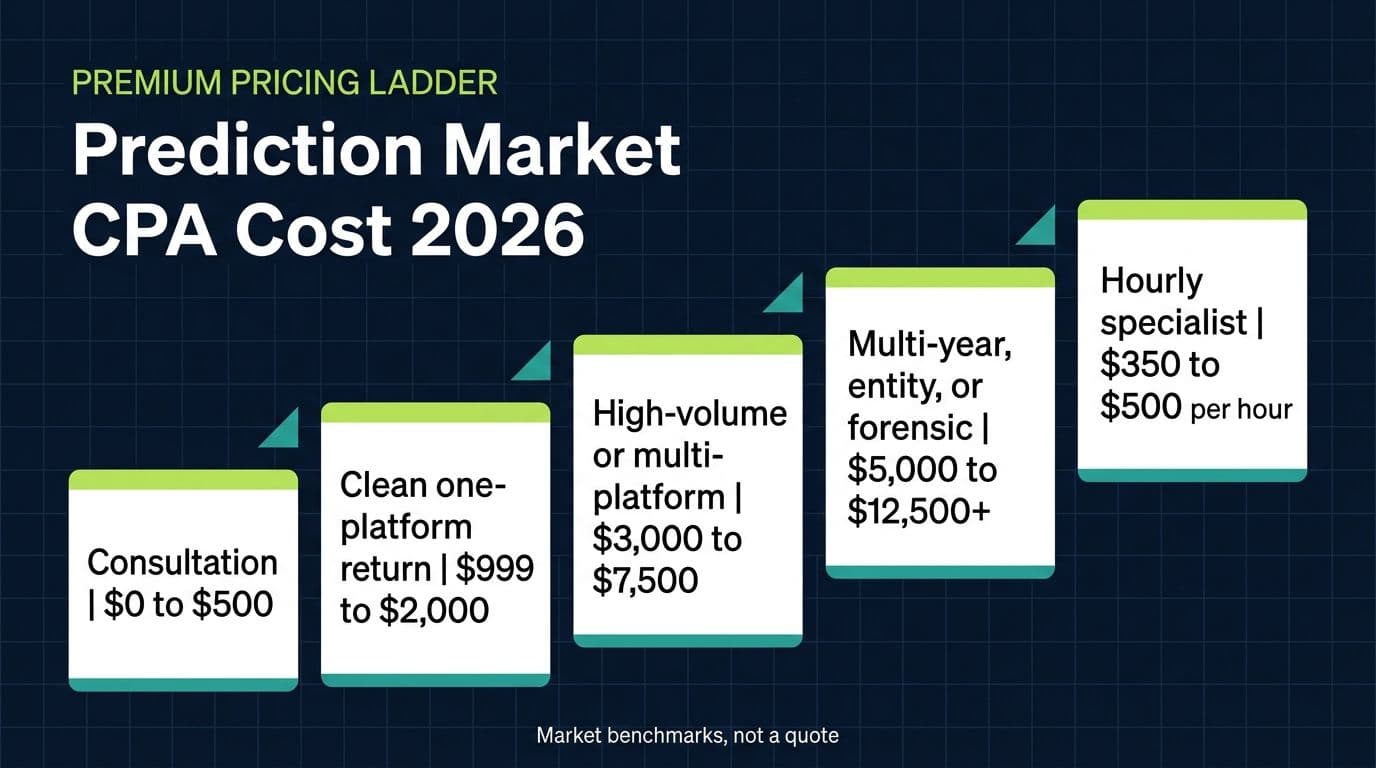
How Much Does a Prediction Market CPA Cost in 2026?
See realistic 2026 prediction market CPA fees, what changes the quote, what should be included, and four worked budgets for Kalshi, Polymarket, and complex filings.
COS Elite /Founder & CEO
The crypto tax CPA who answers his own phone. Led by expertise. Powered by precision.
Certified Public Accountant · California license #133092 · San Diego

Education
University of San Diego
B.A., Accounting and Supply Chain Management
Background
EY → Family Office → COS Elite
Big Four tax, then eight years leading tax for a high-net-worth family office.
About Garrett
Garrett Taylor is a California-licensed CPA (license #133092) and the founder and CEO of COS Elite, a crypto-focused CPA firm based in San Diego. He works directly with crypto investors on tax return preparation, planning, and wealth structuring. No assistants, no pre-screeners: Garrett answers his own phone.
Before founding COS Elite, Garrett spent more than eight years at Tang Capital Management, a San Diego high-net-worth family office with hedge fund and private equity platforms, rising from Associate Director to Executive Director of Tax. There he led tax compliance and strategic planning across complex individuals, trusts, partnerships, public and private C-corporations, and nonprofit entities, while concurrently serving as Executive Director of Tax for Odonate Therapeutics.
He began his career with four years in tax at EY (Ernst & Young), serving private equity, hedge, and mutual fund clients in the Financial Services Office in Chicago before moving to the real estate tax group in San Diego. He holds a bachelor’s degree in Accounting and Supply Chain Management from the University of San Diego.
His practice today centers on crypto taxation: DeFi and NFT activity, Form 1099-DA reconciliation, cost basis optimization, IRS notice response, and entity structuring for serious digital asset investors. He also serves as Director of Tax and Compliance (External) for Count On Sheep, a crypto tax reconciliation firm.

Editorial review
Every article is reviewed for technical accuracy by Leanne Grant, an IRS Enrolled Agent (license #00167954-EA).
Pick your starting point. Both paths put you on Garrett’s calendar directly. No assistants, no pre-screeners.
Direct access to Garrett. He’ll work with you as a team, every step of the way.
53 articles

See realistic 2026 prediction market CPA fees, what changes the quote, what should be included, and four worked budgets for Kalshi, Polymarket, and complex filings.

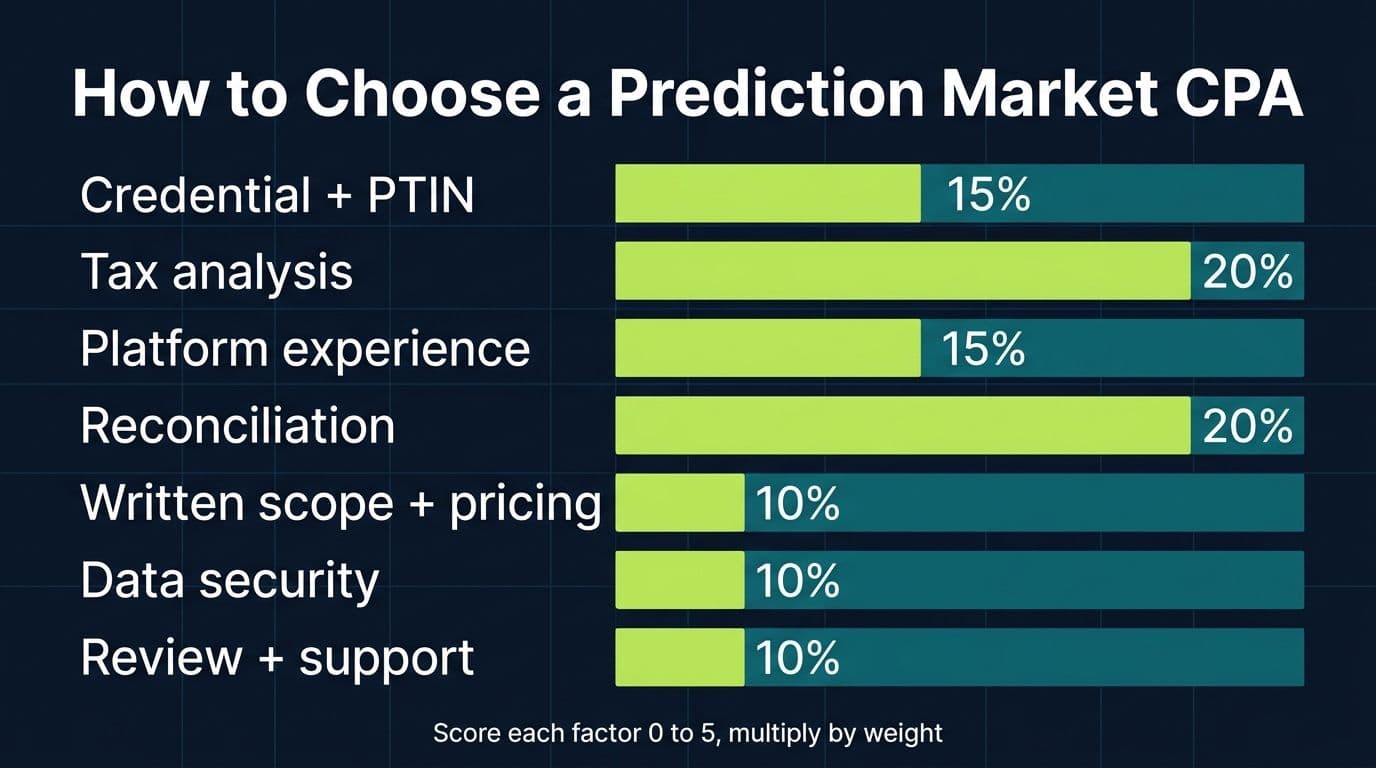
A CPA-written checklist for comparing prediction market tax professionals, verifying credentials, testing Kalshi and Polymarket expertise, and avoiding scope gaps.

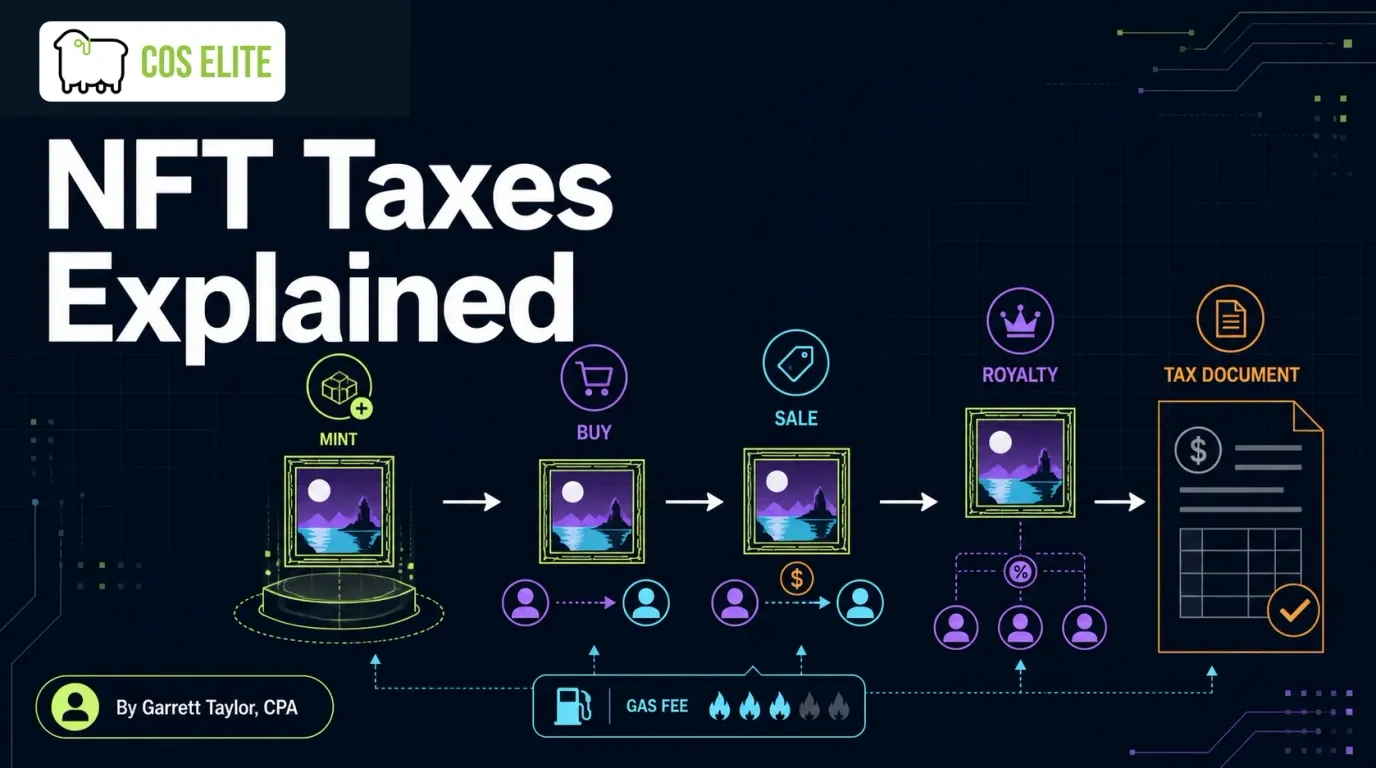
How NFTs are taxed in the US, including minting, buying, selling, royalties, and collectibles treatment. Our crypto CPAs file your NFT activity correctly.

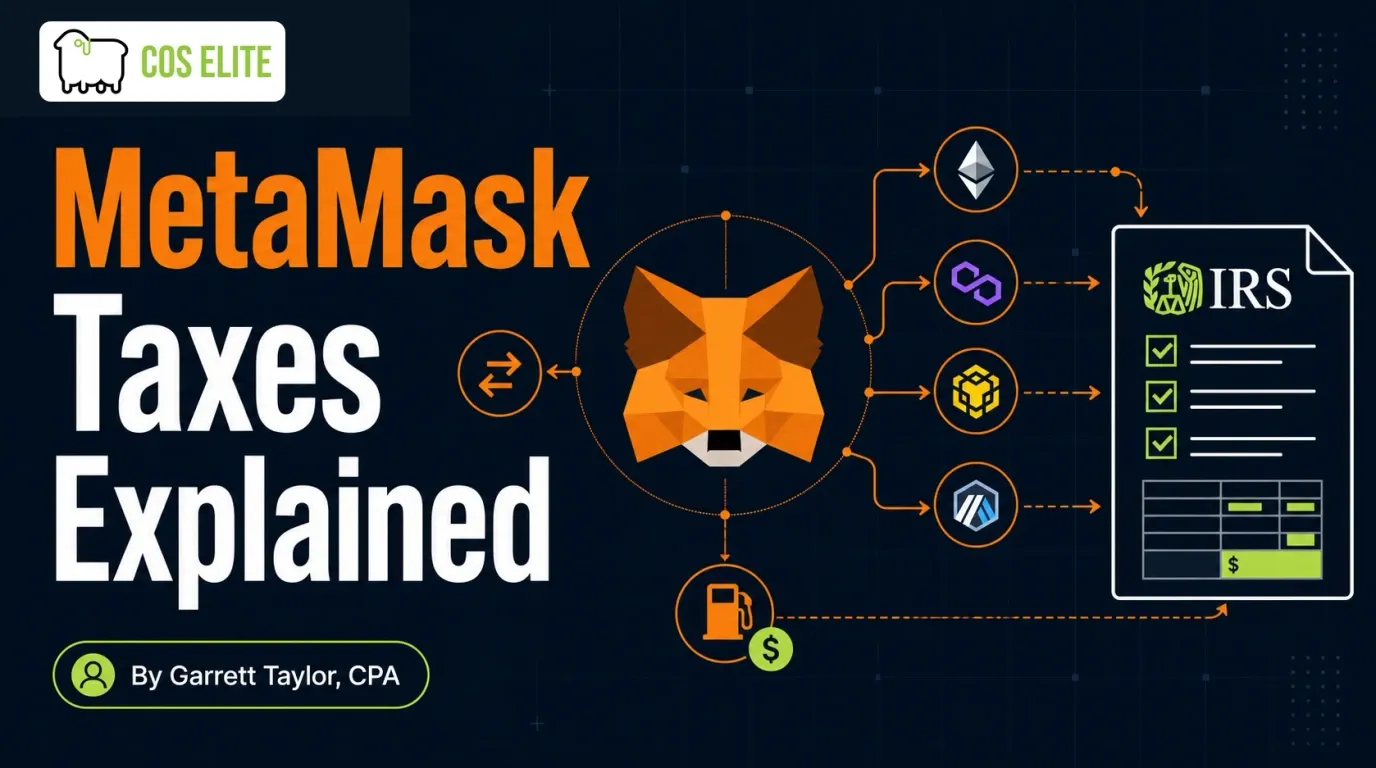
How to report MetaMask wallet activity, swaps, gas fees, DeFi, and NFTs on your US taxes. Messy wallet history? Our crypto CPAs reconcile and file it.

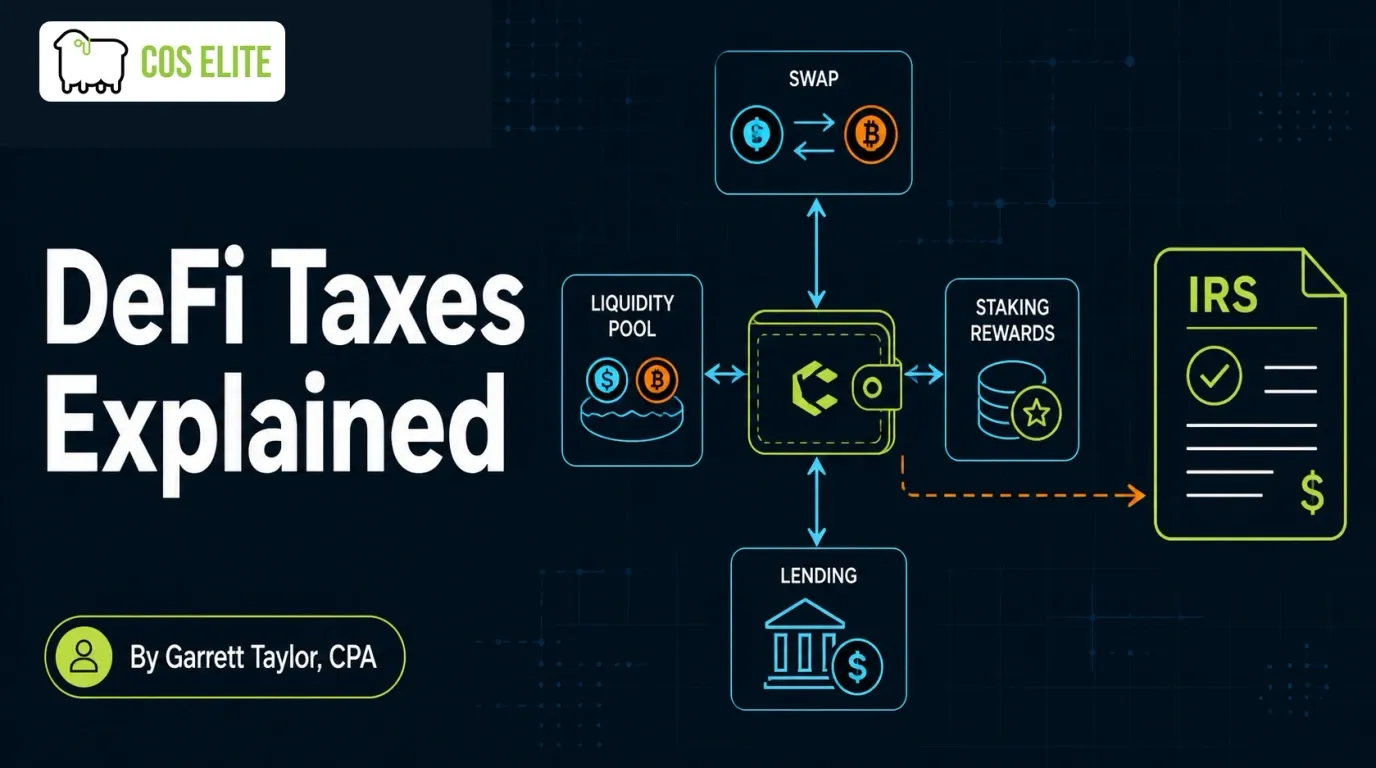
How DeFi is taxed in the US: staking, liquidity pools, yield farming, lending, and airdrops. Complex DeFi history? Our crypto CPAs handle it.

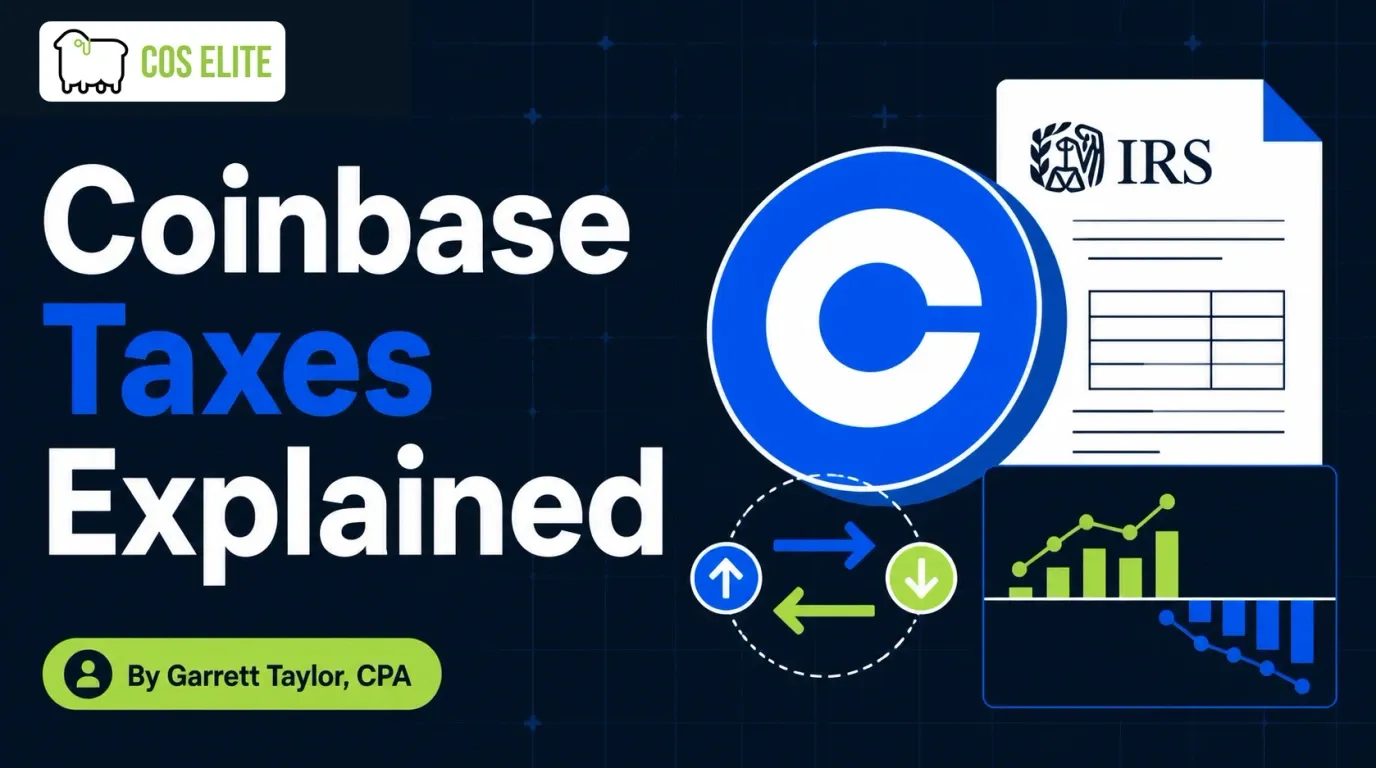
Understand how Coinbase transactions are taxed, what forms Coinbase issues, and how to report them. Need help? Our crypto CPAs file it for you.

A step-by-step explanation of how a crypto tax accountant turns exchange, wallet, DeFi, and broker records into a supportable tax return.

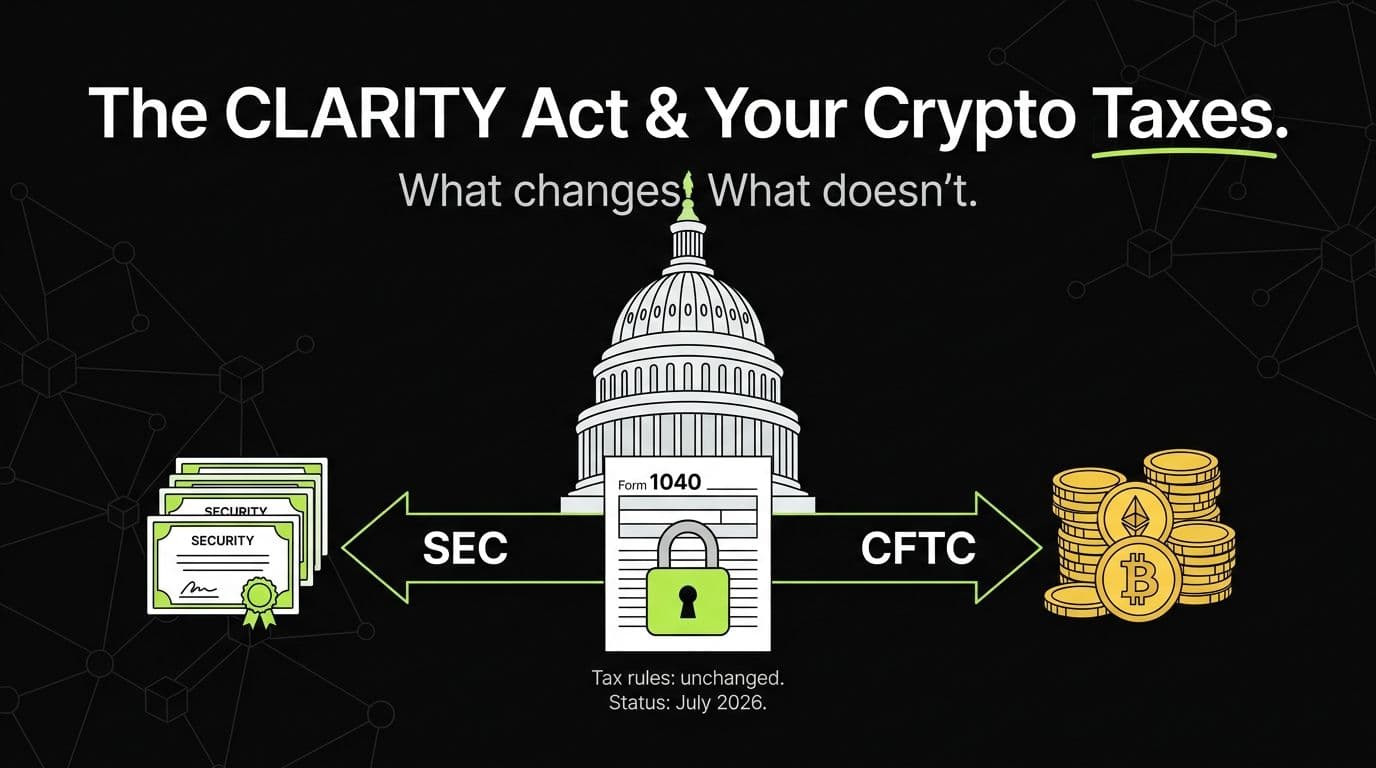
The CLARITY Act rewrites who regulates crypto, not how it's taxed. A CPA breaks down what changes, what doesn't, and the real tax effects to watch.

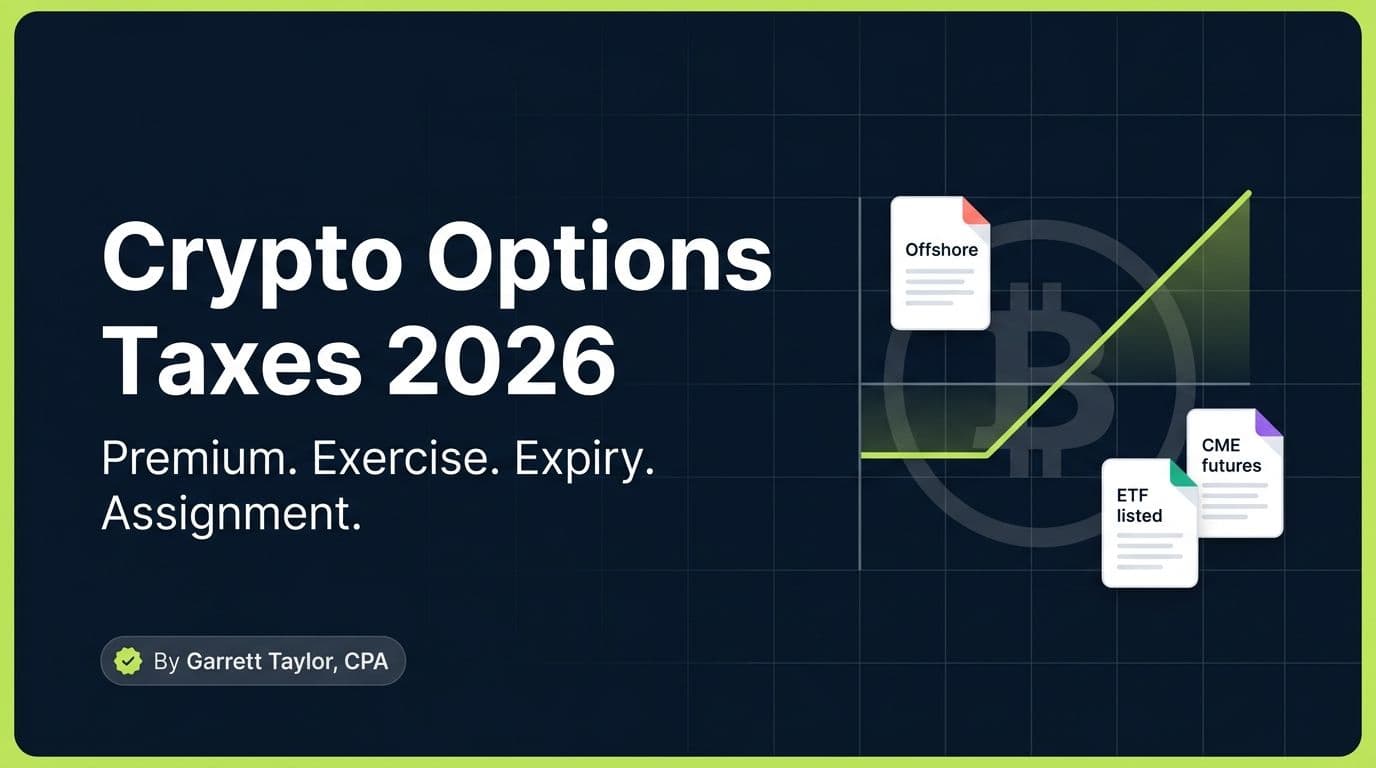
Deribit options, IBIT covered calls, and CME futures options are taxed three different ways. A CPA prices premium, exercise, expiry, and assignment, and settles the 60/40 question per instrument.

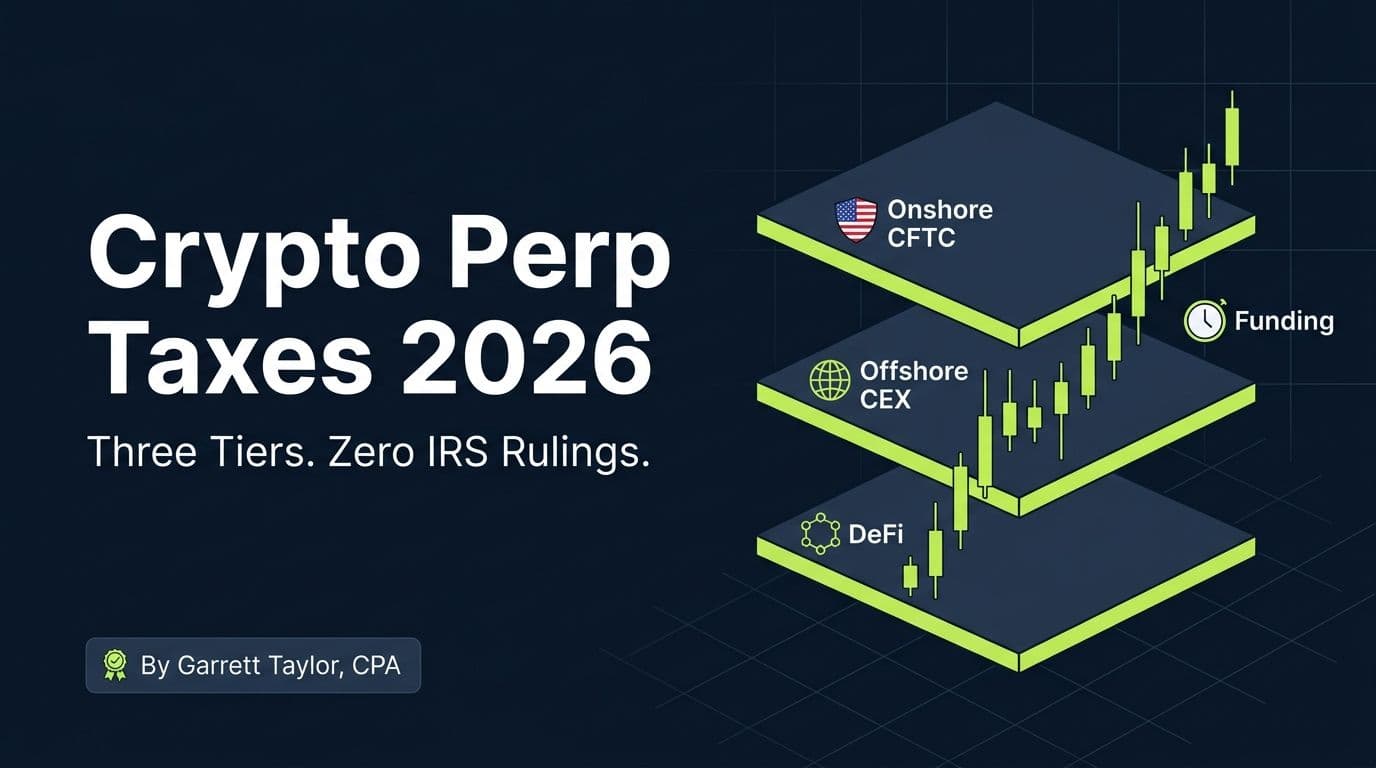
Perps now trade on three regulatory tiers with three tax stories. A CPA maps Section 1256 per tier, funding both directions, liquidations, collateral traps, and a full worked year.

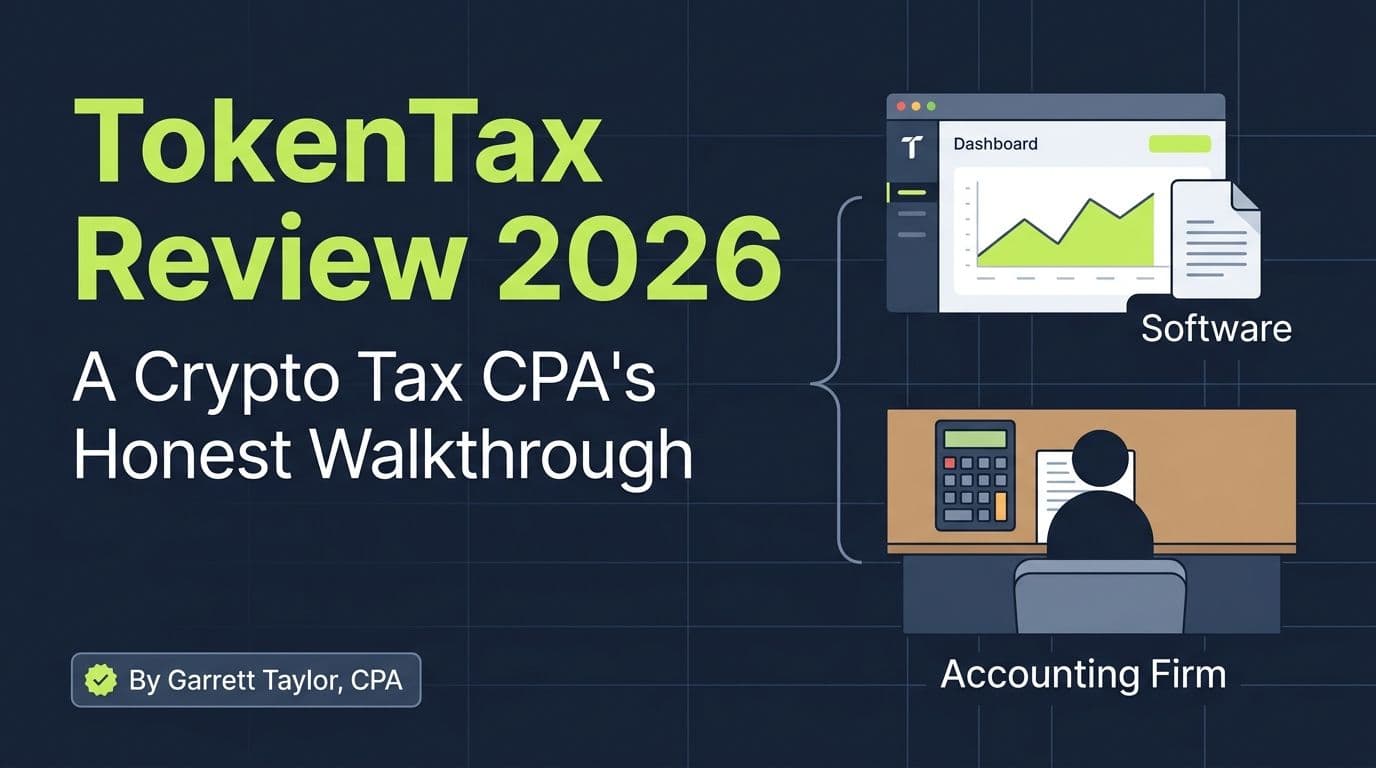
A crypto tax CPA reviews TokenTax for 2026: real pricing from $49 to $3,499, the software vs full-service question, and where you still need your own CPA.

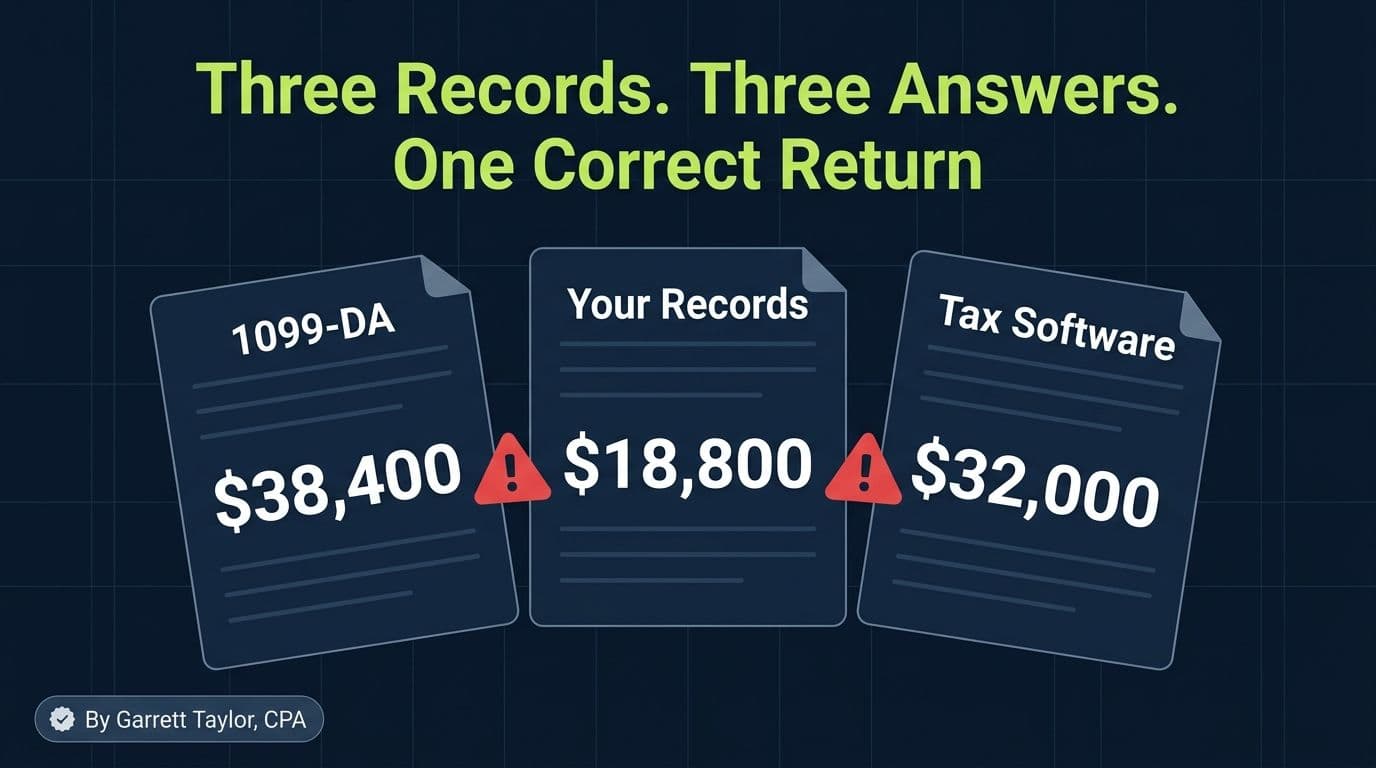
Your 1099-DA, your wallet history, and your tax software all disagree. A CPA explains the five common mismatches and the exact reconciliation workflow.

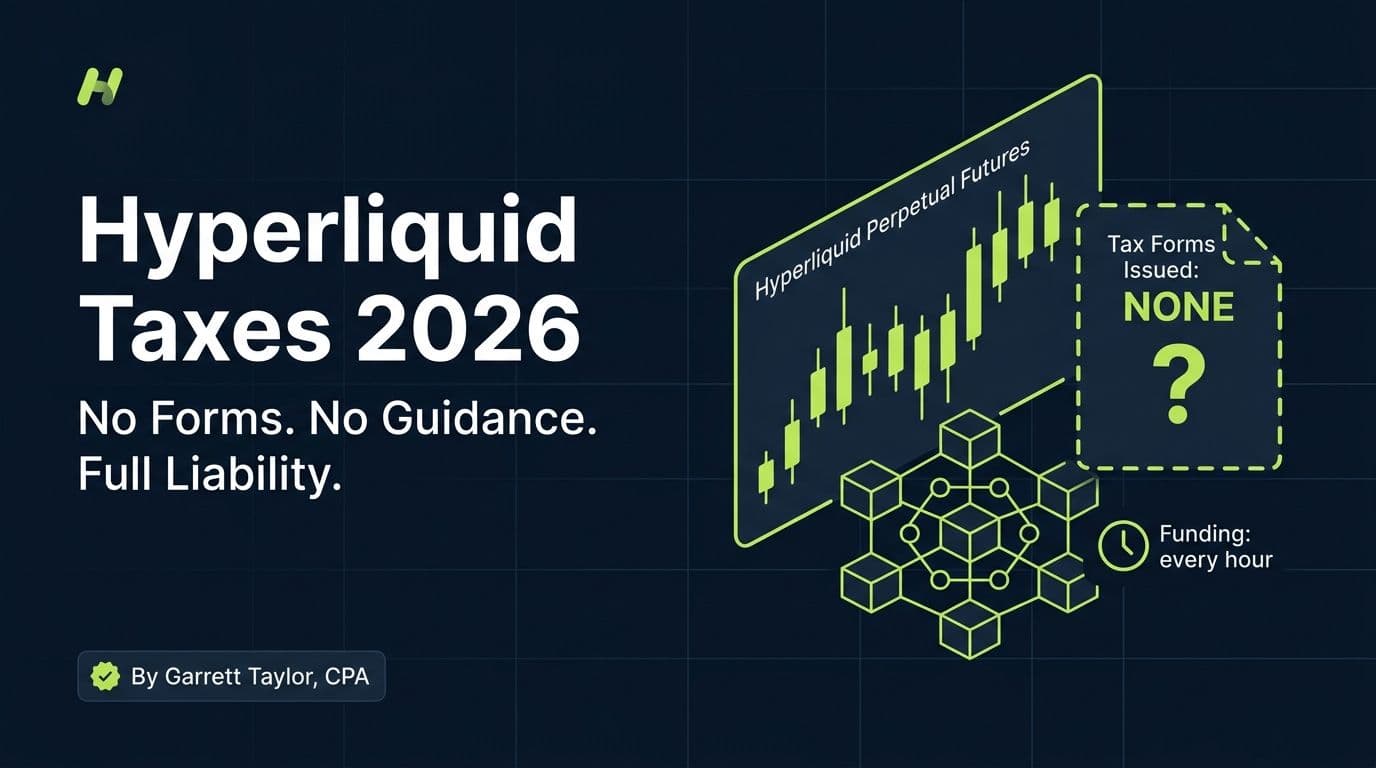
Hyperliquid issues no tax forms and the IRS has no perp guidance. A CPA covers perps, hourly funding, the HYPE airdrop, and a full worked year with real numbers.

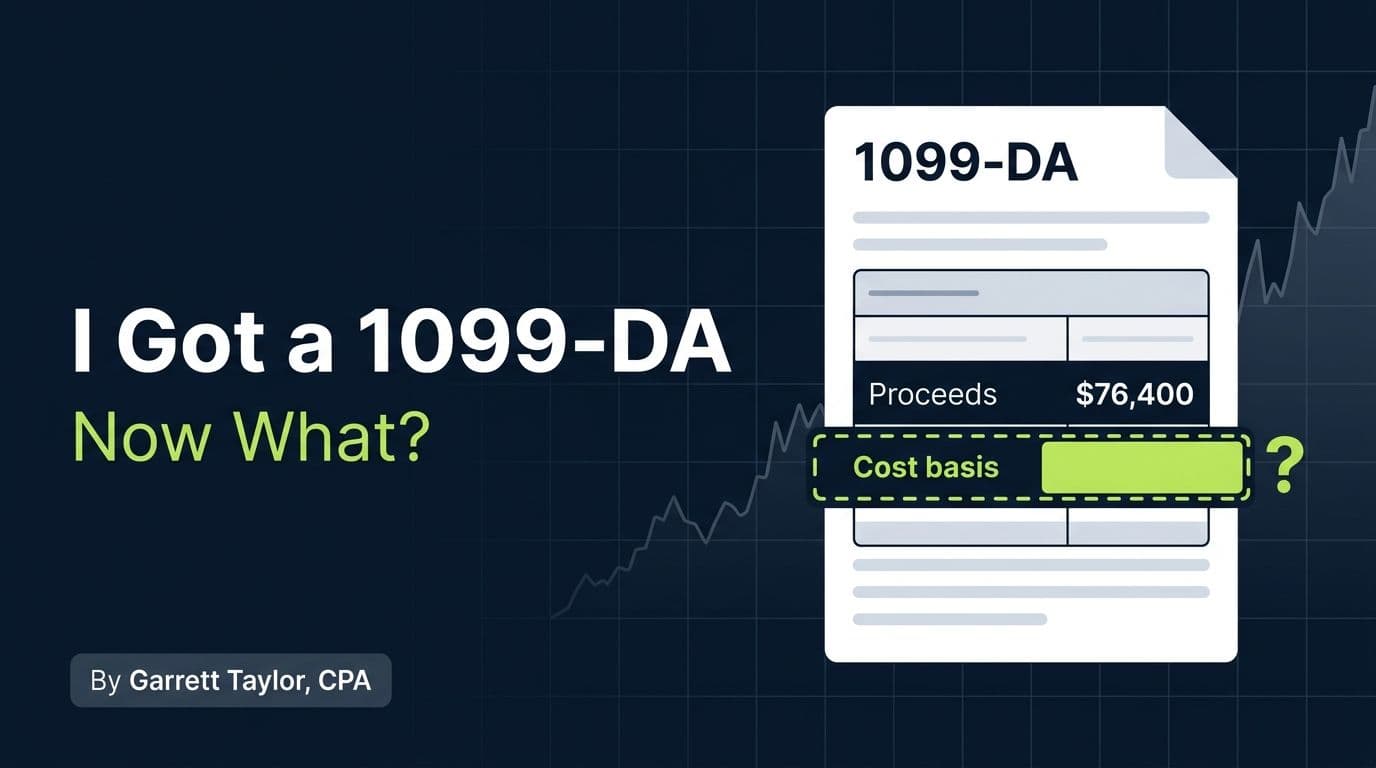
Form 1099-DA reports your crypto proceeds to the IRS, usually with no cost basis. A CPA explains every box, what to do before filing, and when to amend.

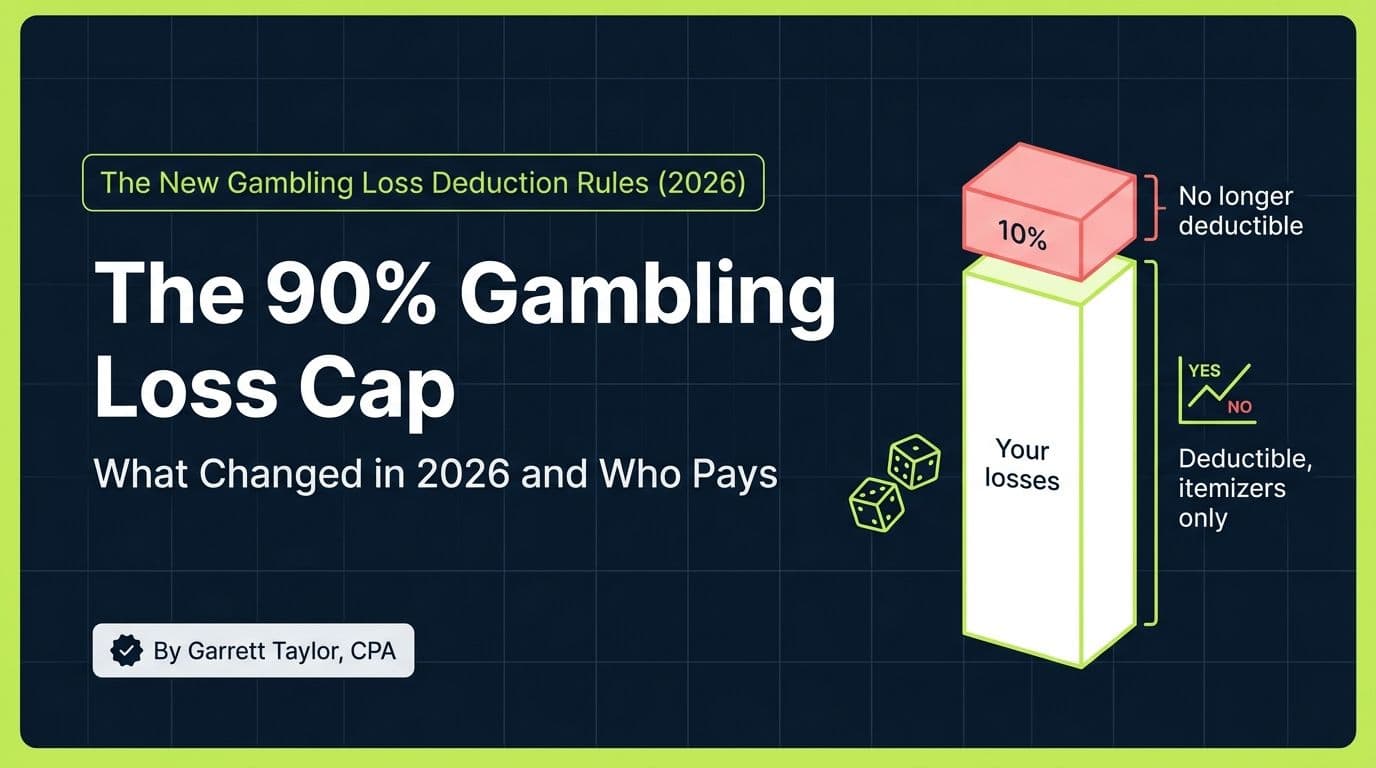
From 2026, gambling losses deduct at only 90%, itemizers only. A CPA runs the phantom income math, the standard deduction trap, the session question, and what event contract and crypto traders should do about it.

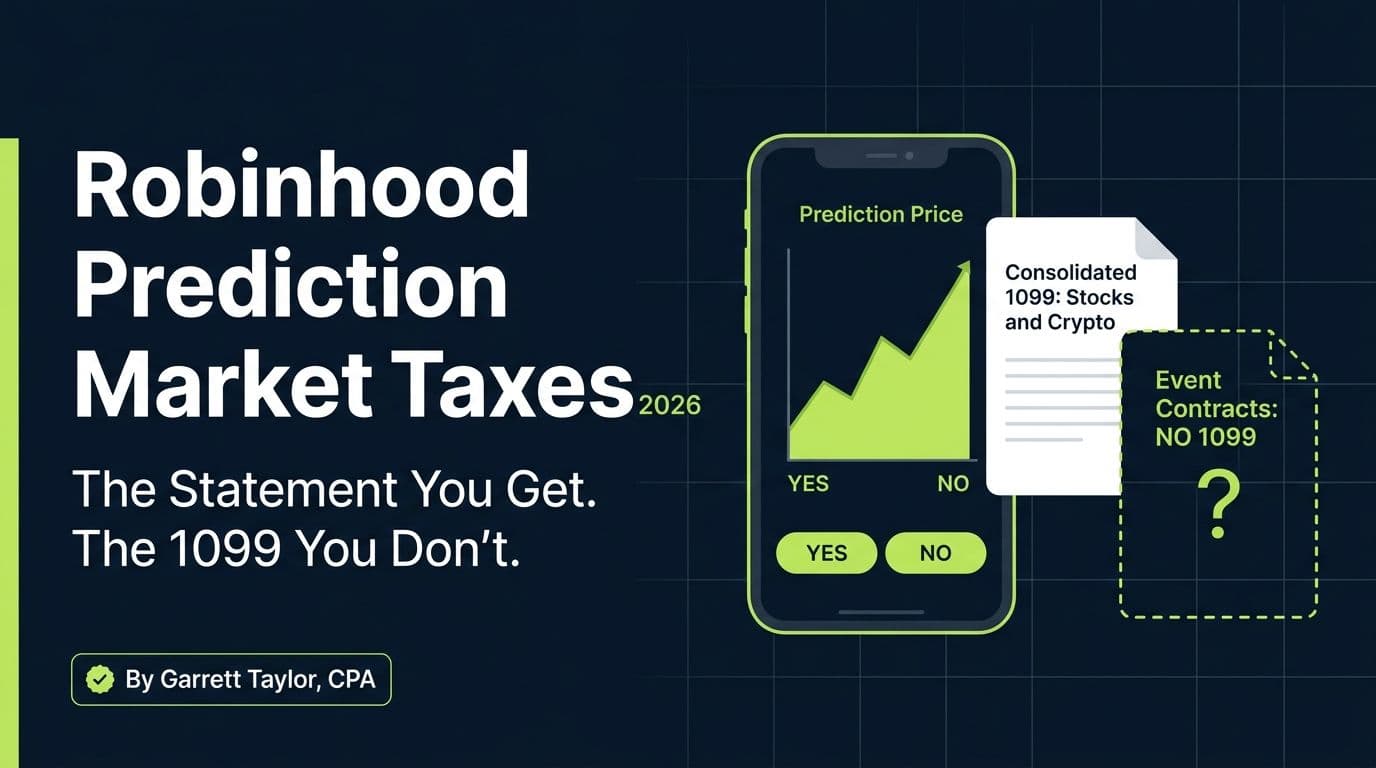
Robinhood issues no 1099 for event contracts, just an Annual Statement the IRS never sees. A CPA explains the form gap, four tax treatments, and a full worked year.

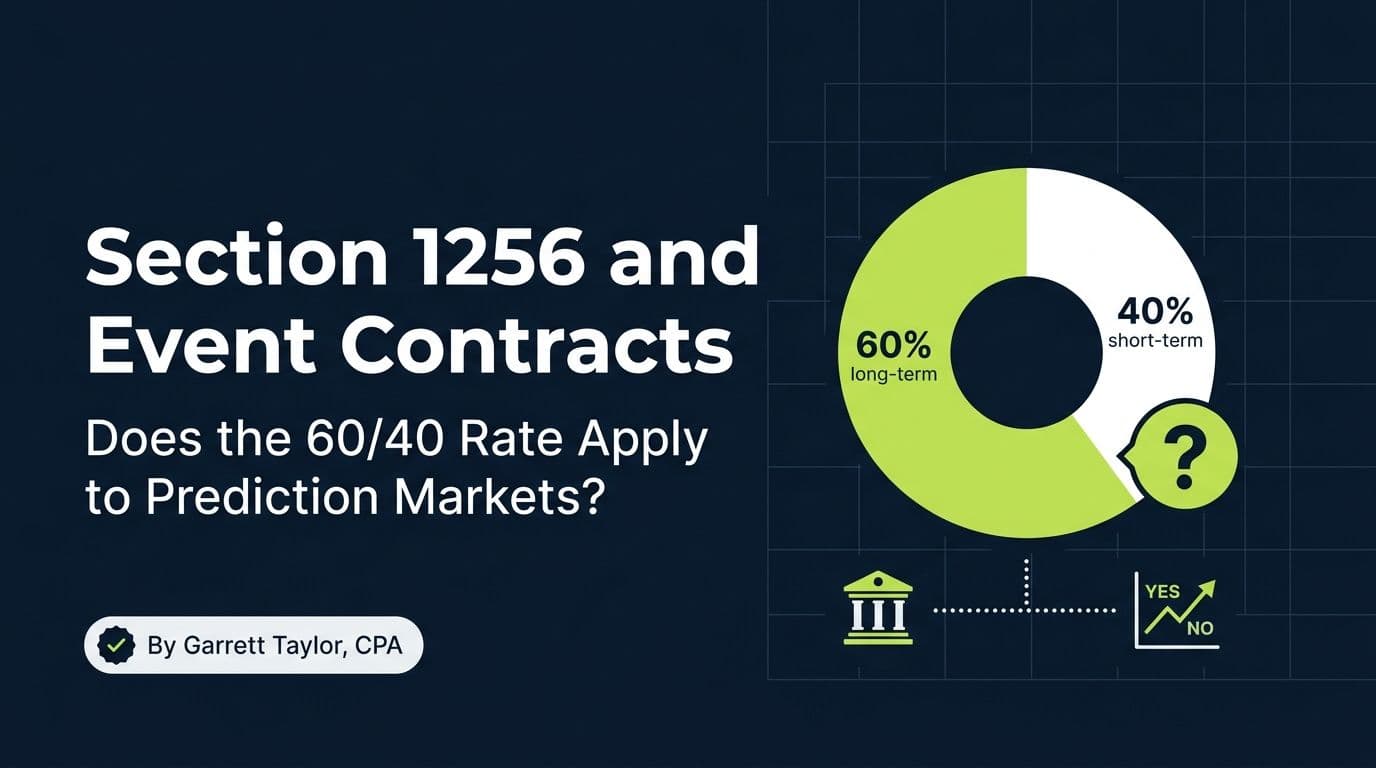
Section 1256's 60/40 rate could cut a prediction market trader's federal bill by a quarter, but no platform reports event contracts that way. A CPA walks the statutory test, the math, and the Form 6781 and Form 8275 mechanics.

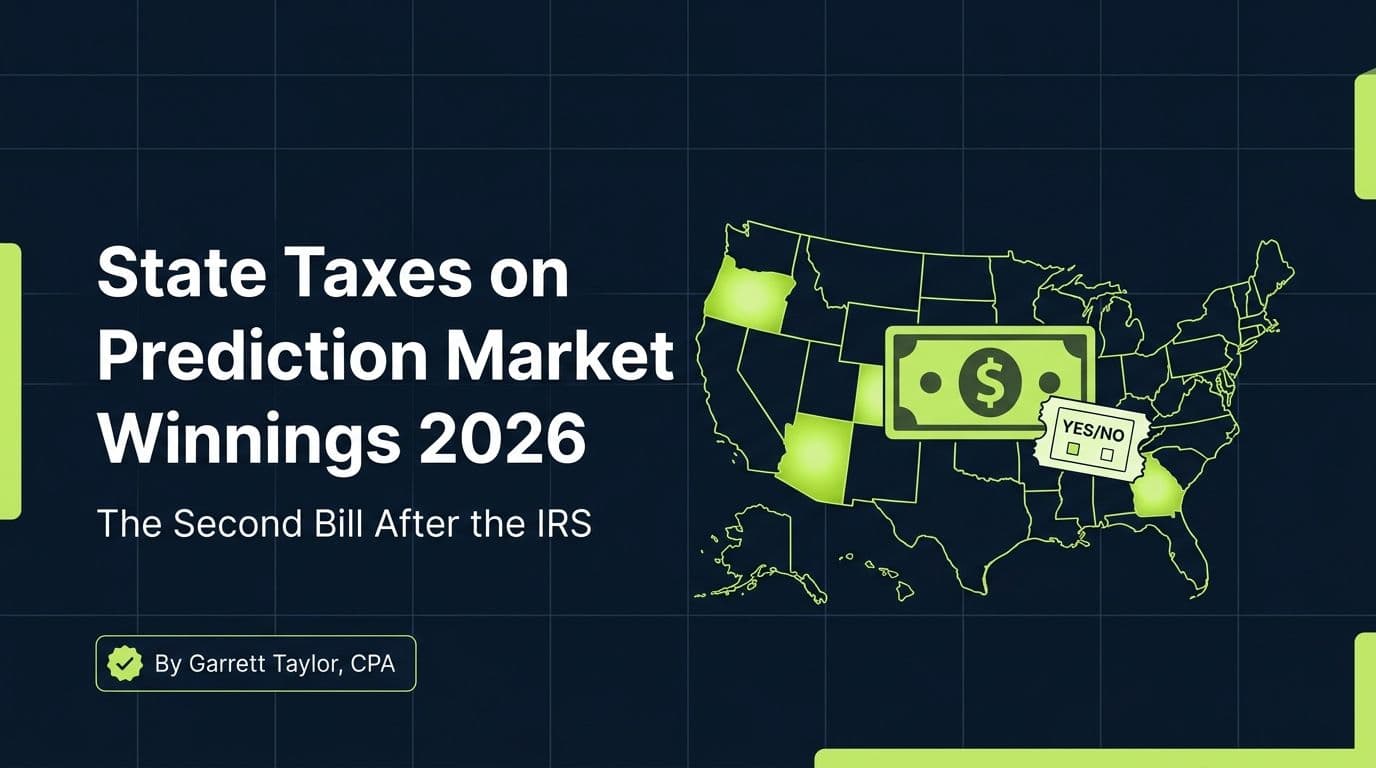
Your state taxes prediction market profits too, and in some states a gambling characterization means tax on gross winnings with no loss deduction. A CPA maps all 50 states, prices one trader in five of them, and covers the 2026 changes.

Prediction-market profits are taxable, but treatment varies by product and platform. Compare ordinary, capital, Section 1256, wagering, reporting, loss, and crypto-settlement rules.
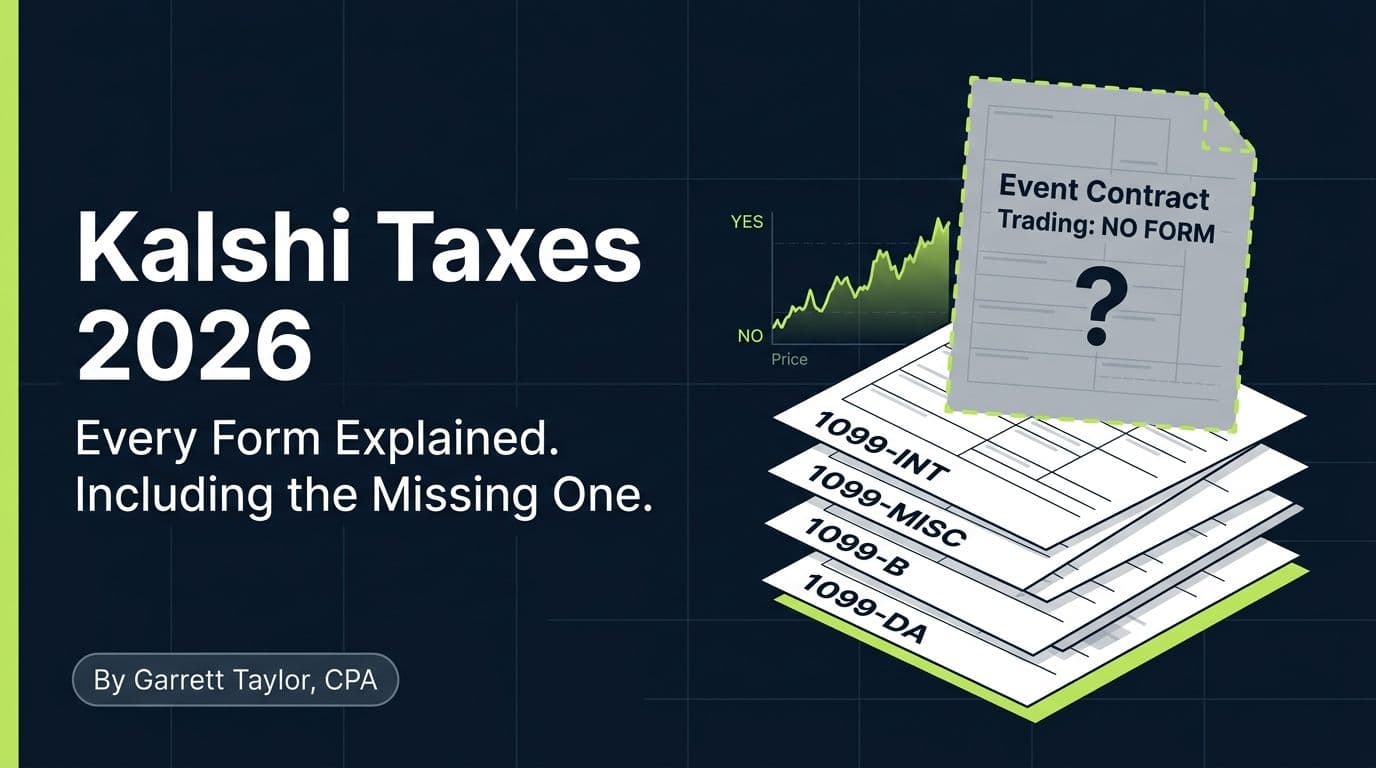
Kalshi profits are taxable even without a trading 1099. Learn which forms Kalshi provides, how to report PnL, and why event contracts and perpetual futures require different analysis.

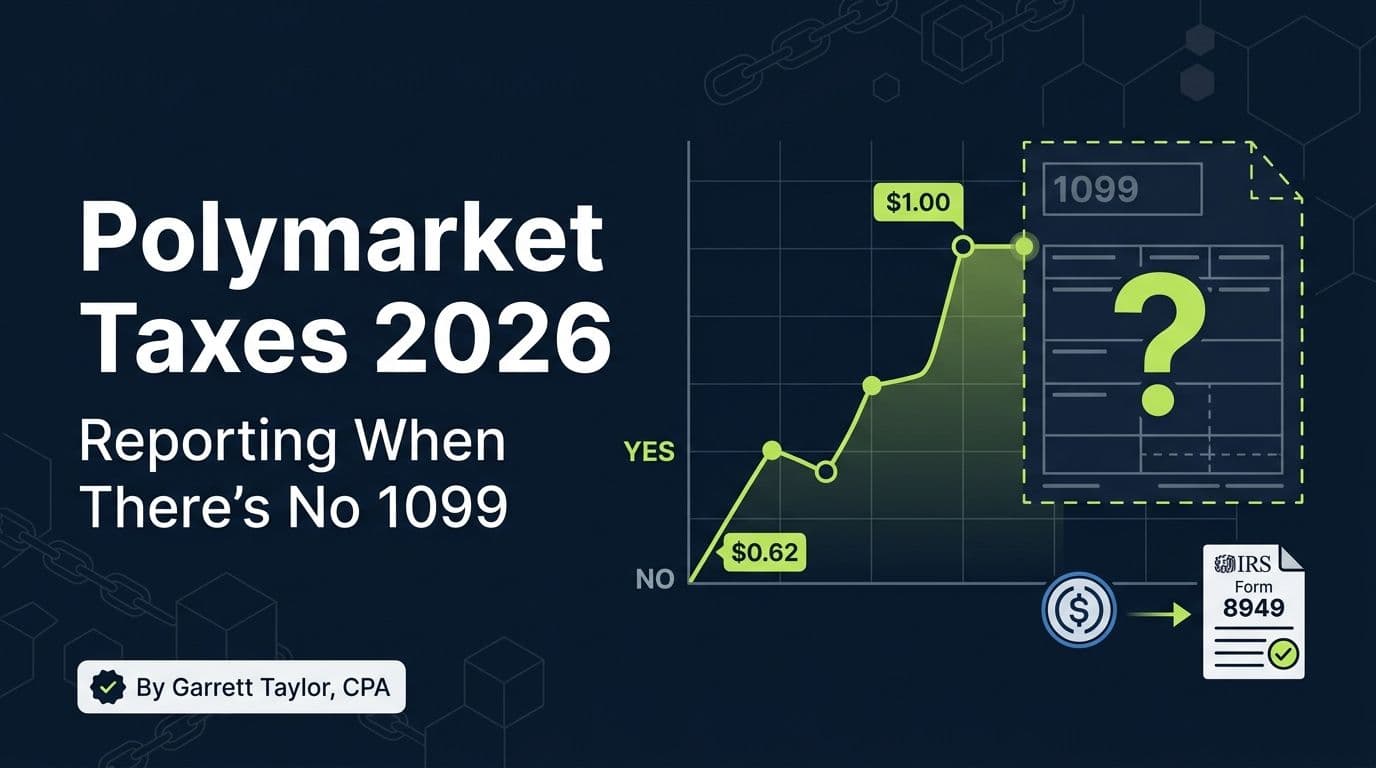
Polymarket sends no 1099, but your winnings are still taxable. A CPA explains the forms, the four tax treatments, and the USDC layer, with worked numbers.

A fake NFT minting platform charges fake gas fees and shows fake sales you can never withdraw. If you minted as an investment, that loss is often deductible. Here is how the rules apply.

A fake crypto investment platform shows you climbing profits you can never withdraw. If you invested for profit, that loss is often deductible. Here is how the theft-loss rules apply.

A fake crypto customer service rep convinces you to move your funds to a 'safe' wallet, then takes them. That loss is often a deductible theft loss. Here is how the tax rules apply.

A crypto phishing scam can empty a wallet in one signature. If the drained crypto was held for investment, that loss is often deductible. Here is how the theft-loss rules apply and how to claim it.

A pig butchering scam can wipe out a life savings. The lesser-known part: that loss is often deductible. Here is how the §165(c)(2) theft-loss rules apply to pig butchering, and how to actually claim it.

If you lost crypto to a pig butchering scam, phishing attack, or rug pull, you probably have a deductible loss. IRS Chief Counsel Memo 202511015 made the rules clear in 2025. Most CPAs still won't file it. Here's the framework that works.

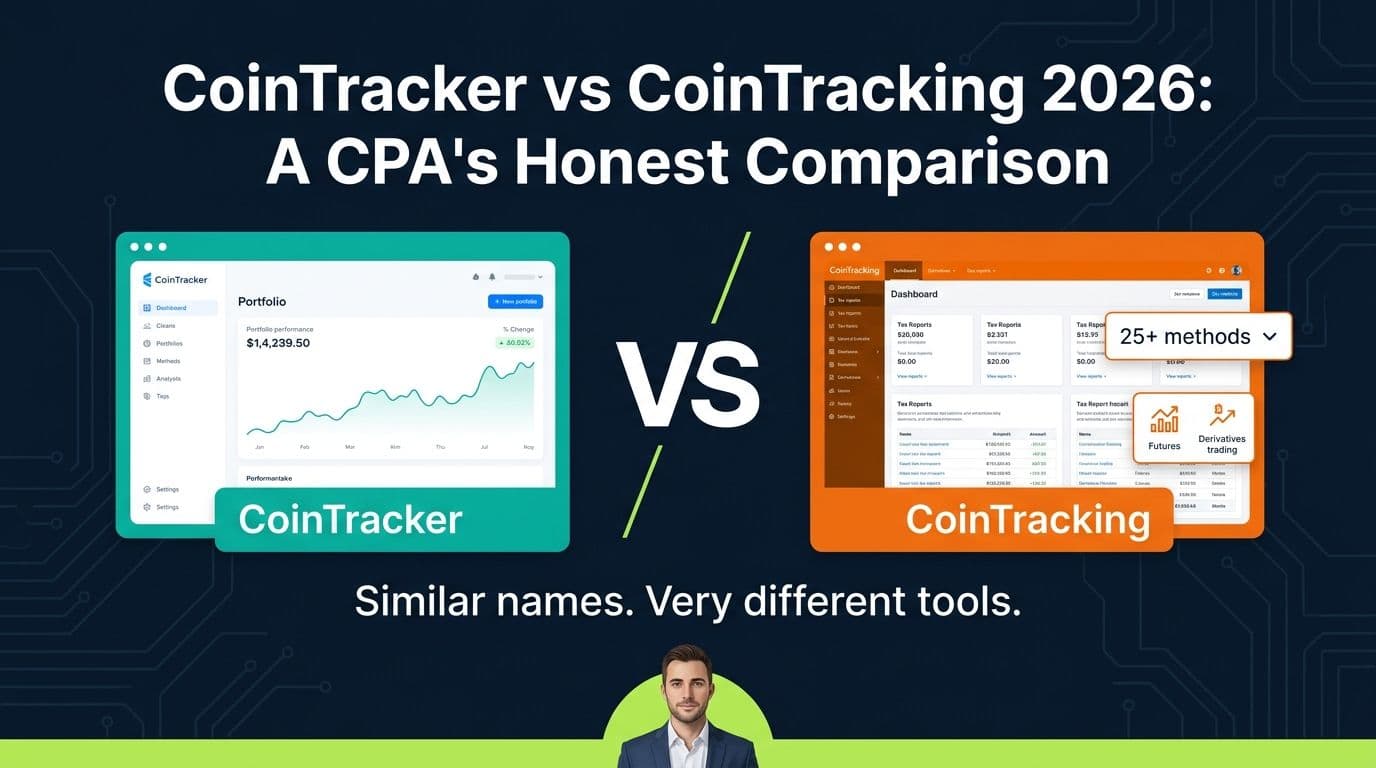
CoinTracker or CoinTracking? After 500+ client returns filed on both, the answer is clear for nearly every individual crypto investor in 2026. Here is the honest comparison.

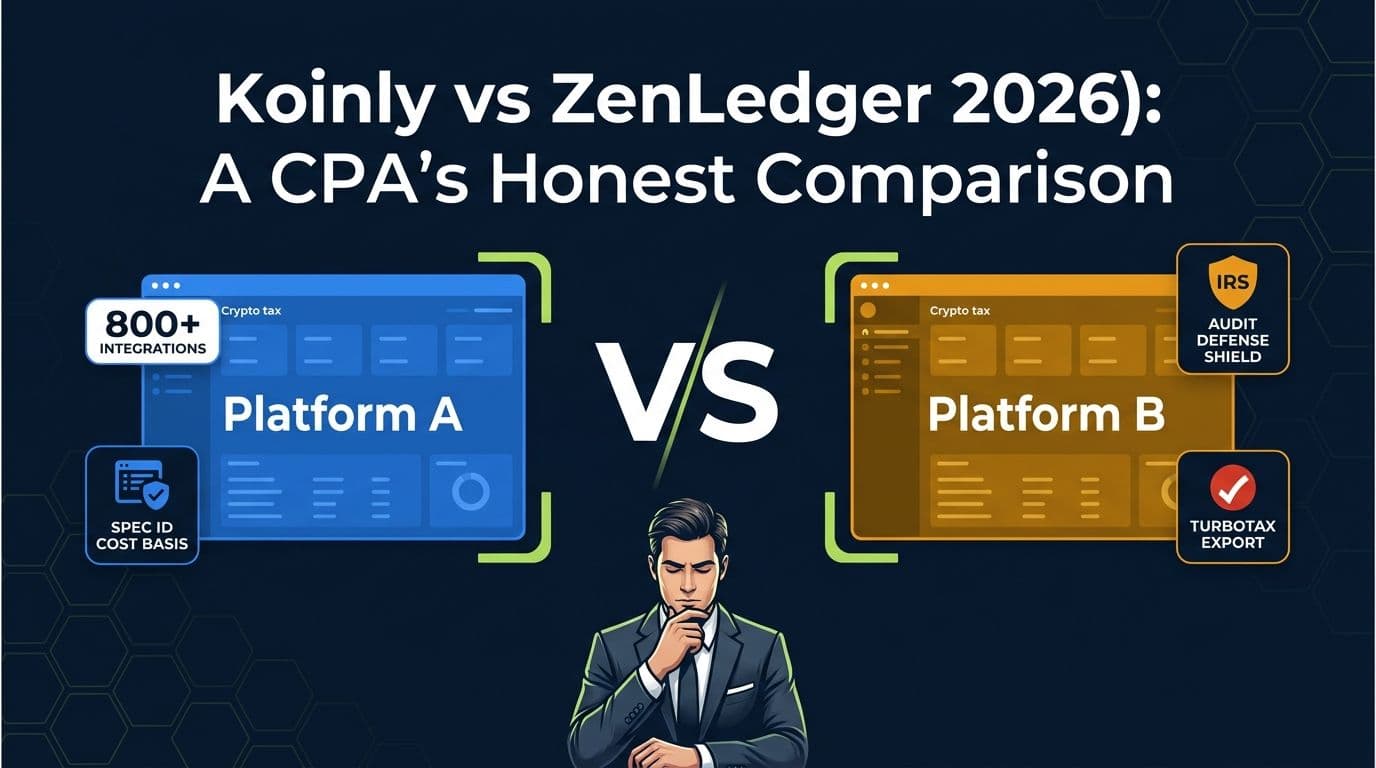
A CPA who uses both platforms daily compares Koinly vs ZenLedger on pricing, DeFi support, cost basis methods, audit defense, and real tax outcomes.

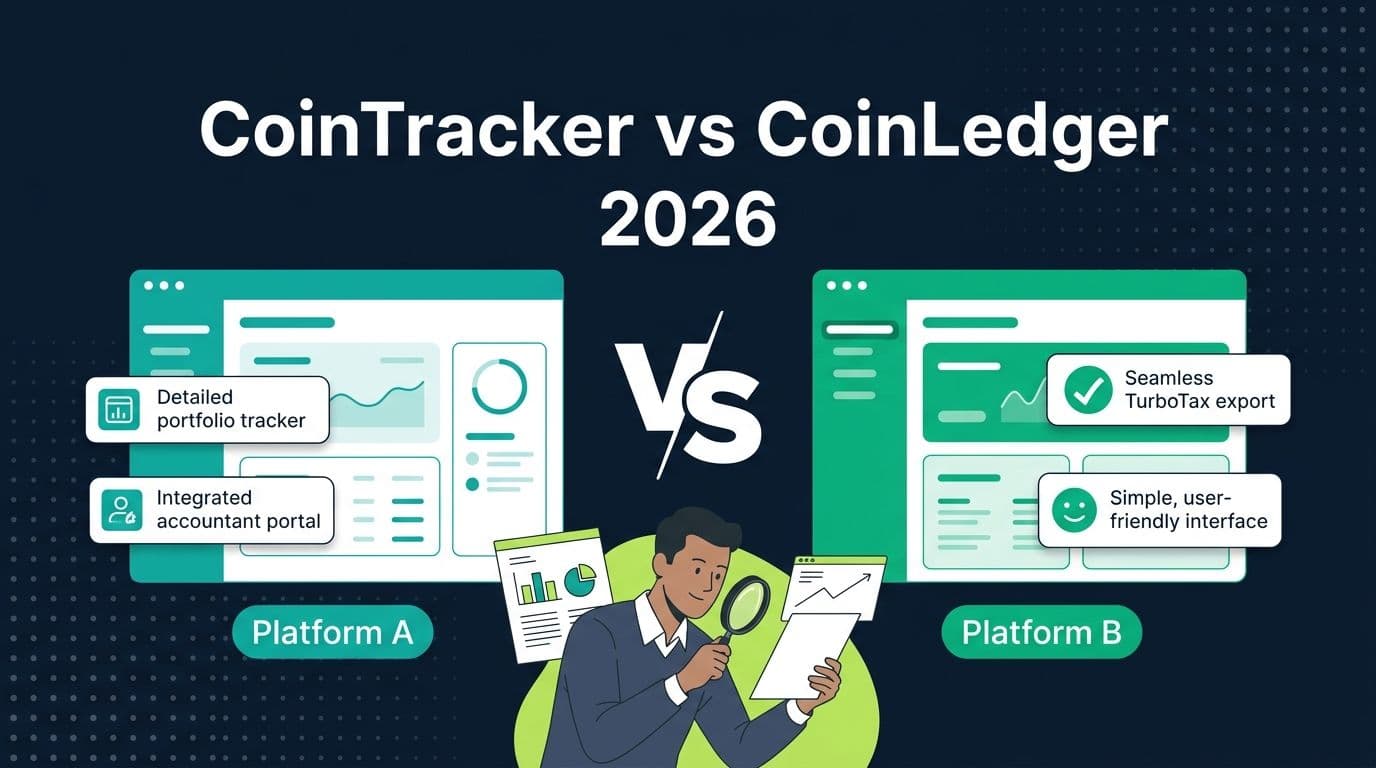
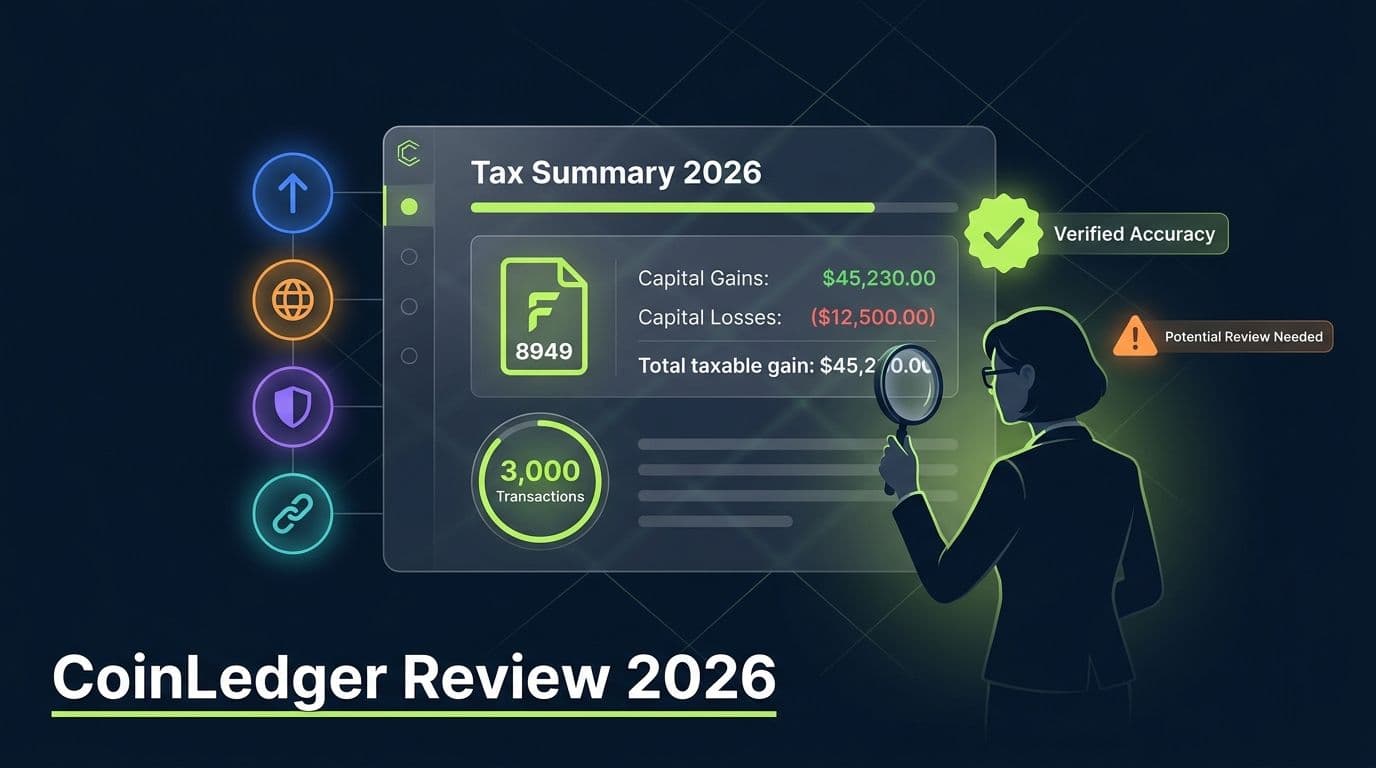
A licensed CPA compares CoinTracker and CoinLedger head-to-head for 2026. Pricing, features, DeFi, and which crypto tax tool fits your portfolio.

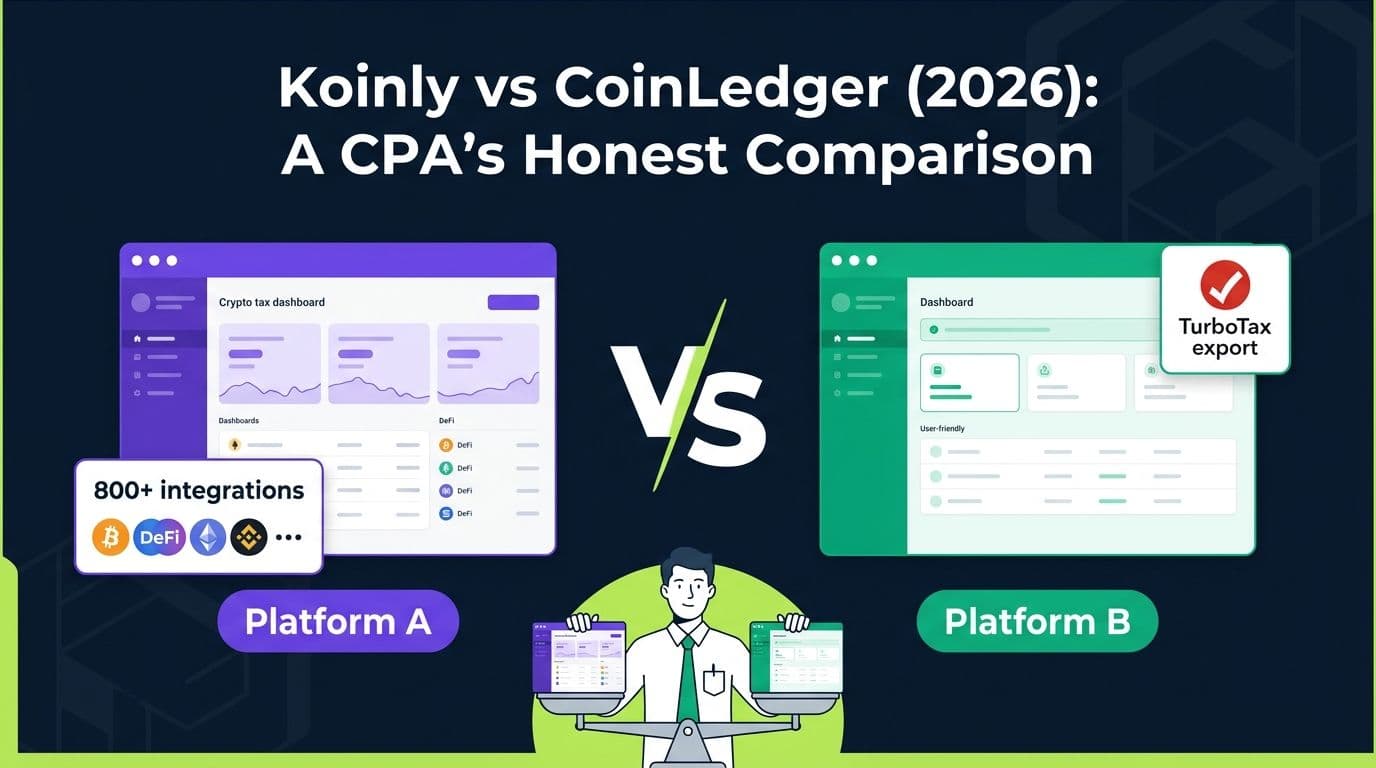
A CPA who uses both tools daily compares Koinly vs CoinLedger for 2026. Pricing, DeFi accuracy, cost basis methods, and a real 800-transaction test.

A CPA's side-by-side comparison of Koinly and CoinTracker for 2026, with pricing breakdowns, DeFi testing, and a real worked example.

A CPA's honest Summ review. AI categorization tested, pricing breakdown, exchange limits, risk assessment, and Koinly comparison.

A CPA's honest ZenLedger review for 2026. Audit defense deep dive, tax-loss harvesting limits, pricing tiers, and Koinly comparison.

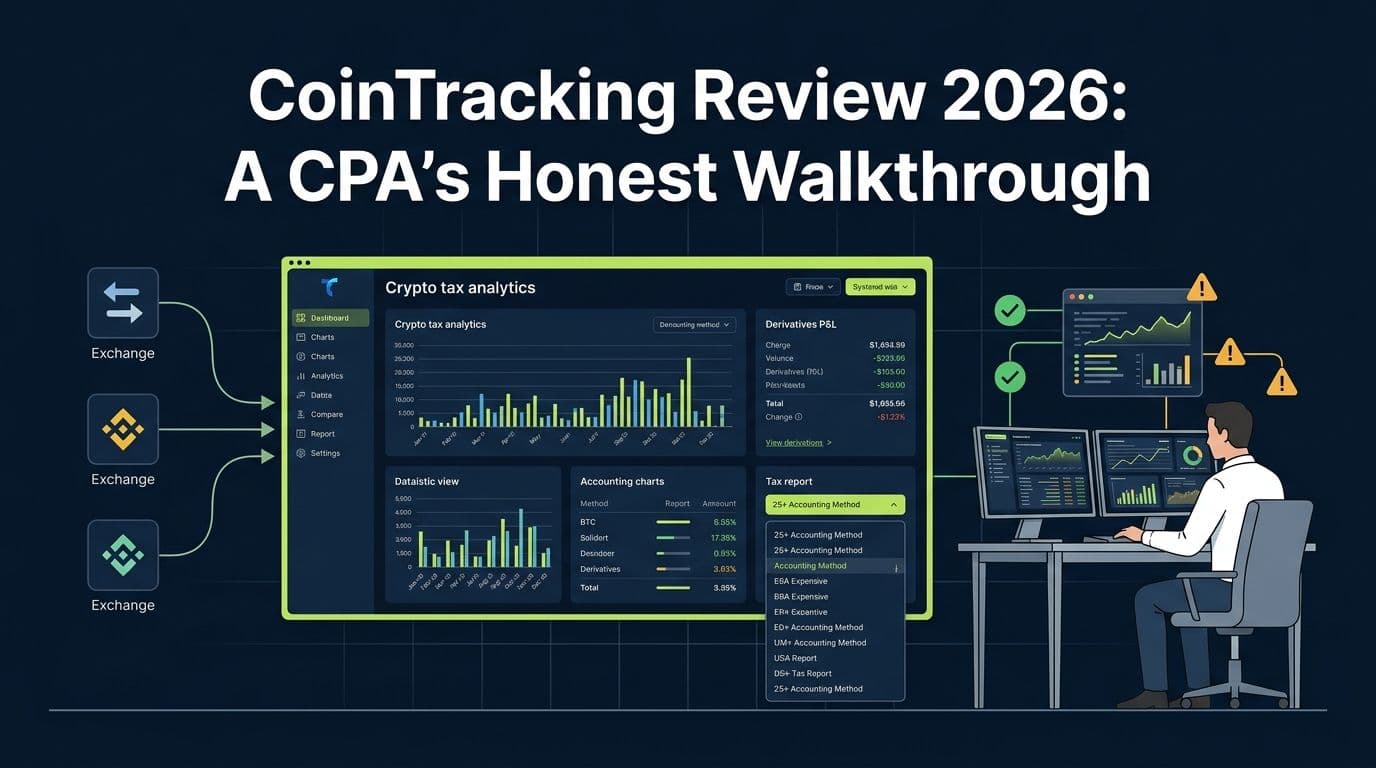
A CPA's honest CoinTracking review for 2026. Futures handling, 25+ accounting methods, common errors, pricing breakdown, and how it compares to Koinly.

How the IRS taxes crypto airdrops and hard fork tokens under Rev. Rul. 2019-24. Dominion and control rules, FMV calculations, cost basis, and worked examples from a crypto CPA.

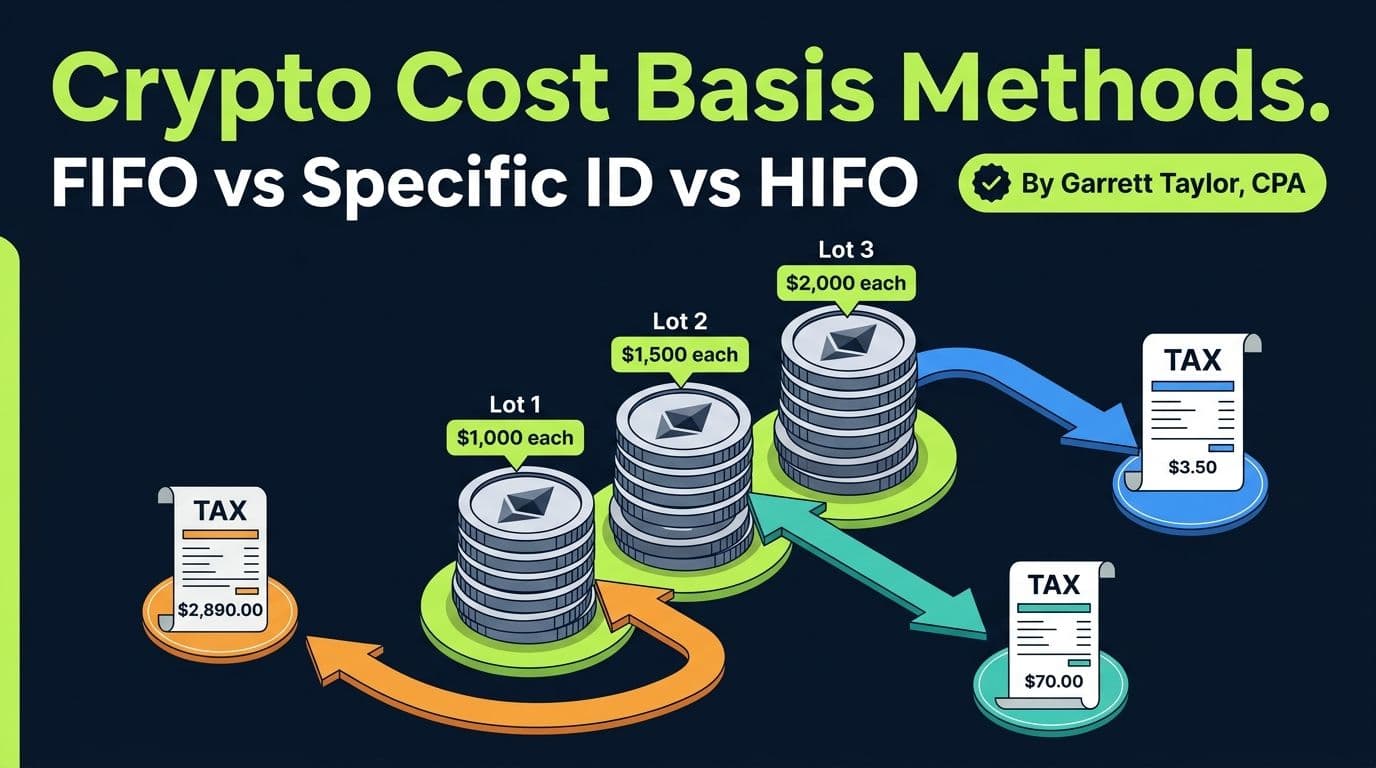
Compare FIFO, LIFO, HIFO, and Specific ID for crypto taxes. Worked example shows how the same sale produces 4 different tax bills. Updated for Rev. Proc. 2024-28, Notice 2026-20, and 1099-DA.

Mined crypto is taxed as ordinary income at fair market value when received. Learn the hobby vs. business test, Schedule C deductions for electricity and hardware, self-employment tax, QBI eligibility, and how to avoid costly mistakes on your 2026 return.

Staking rewards are taxed as ordinary income at fair market value when received, plus capital gains when sold. This guide covers IRS rulings, liquid staking, restaking, validator deductions, and worked examples for 2026.

Every crypto-to-crypto swap is taxable. Learn how to calculate gain/loss, why Section 1031 doesn't apply, and how to handle stablecoin swaps, wrapped tokens, and DEX trades.

The wash sale rule doesn't apply to crypto, yet. Learn how to tax-loss harvest crypto in 2026, what legislation could change, and how to maximize savings before the loophole closes.

Got an IRS crypto notice? Learn exactly how to respond to CP2000, Letter 6173, and Letter 6174 notices. Step-by-step response guide from a crypto tax CPA.

Can you deduct lost or stolen crypto on your taxes? CPA guide covering TCJA suspension, Ponzi safe harbor, FTX/Celsius/Voyager losses, rug pulls, and abandonment losses for 2026.

A CPA who files 500+ crypto returns reviews Koinly, CoinTracker, CoinLedger, CoinTracking, ZenLedger, and Summ. No affiliate links. Just honest verdicts.

A CPA's honest CoinLedger review for 2026. Free vs paid breakdown, TurboTax export workflow, DeFi limitations, common errors, and how it compares to Koinly.

A CPA's honest CoinTracker review for 2026. Common errors, DeFi import quality, 1099-DA reconciliation, pricing, and when you need professional help.

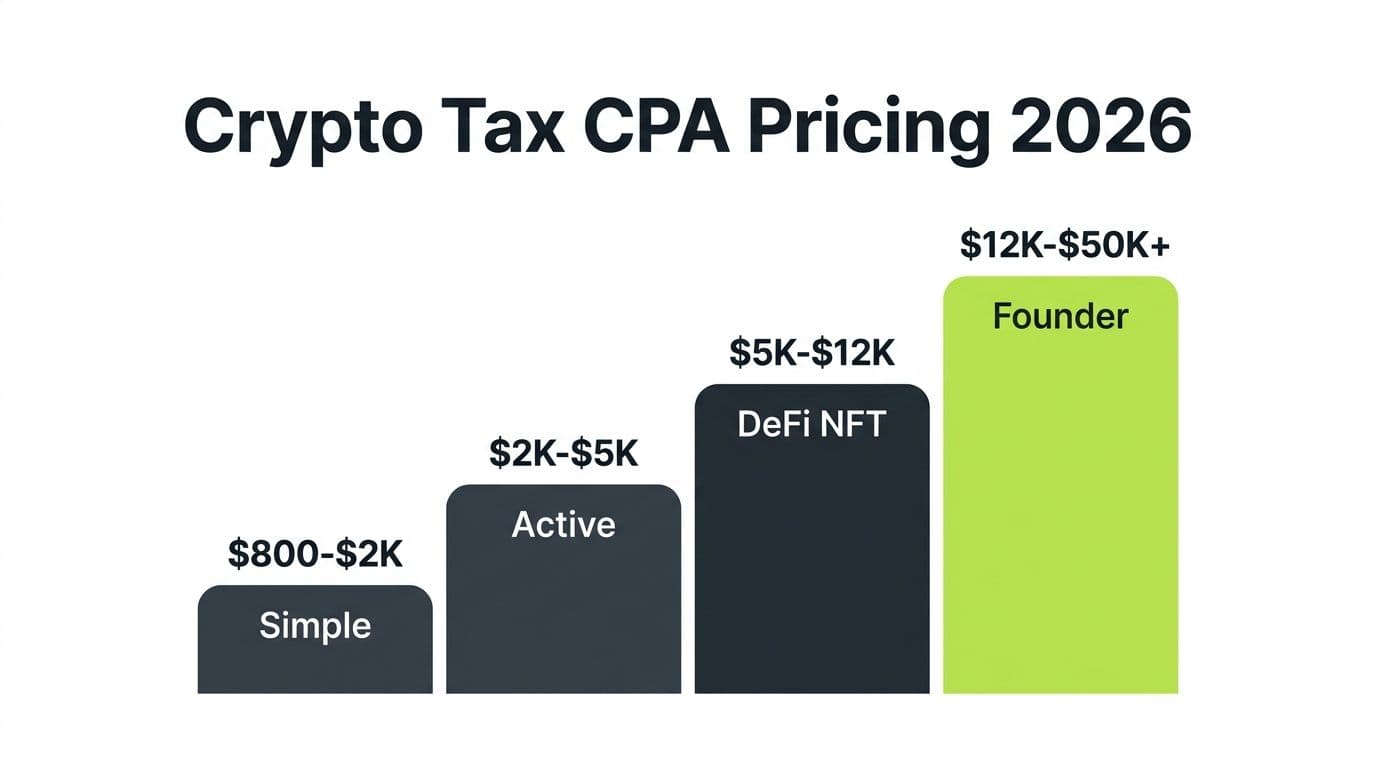
Real crypto tax CPA pricing for 2026: $800 to $50K+ across four tiers. A working CPA breaks down what you'll pay, what's included, and when the ROI math makes it worth every dollar.

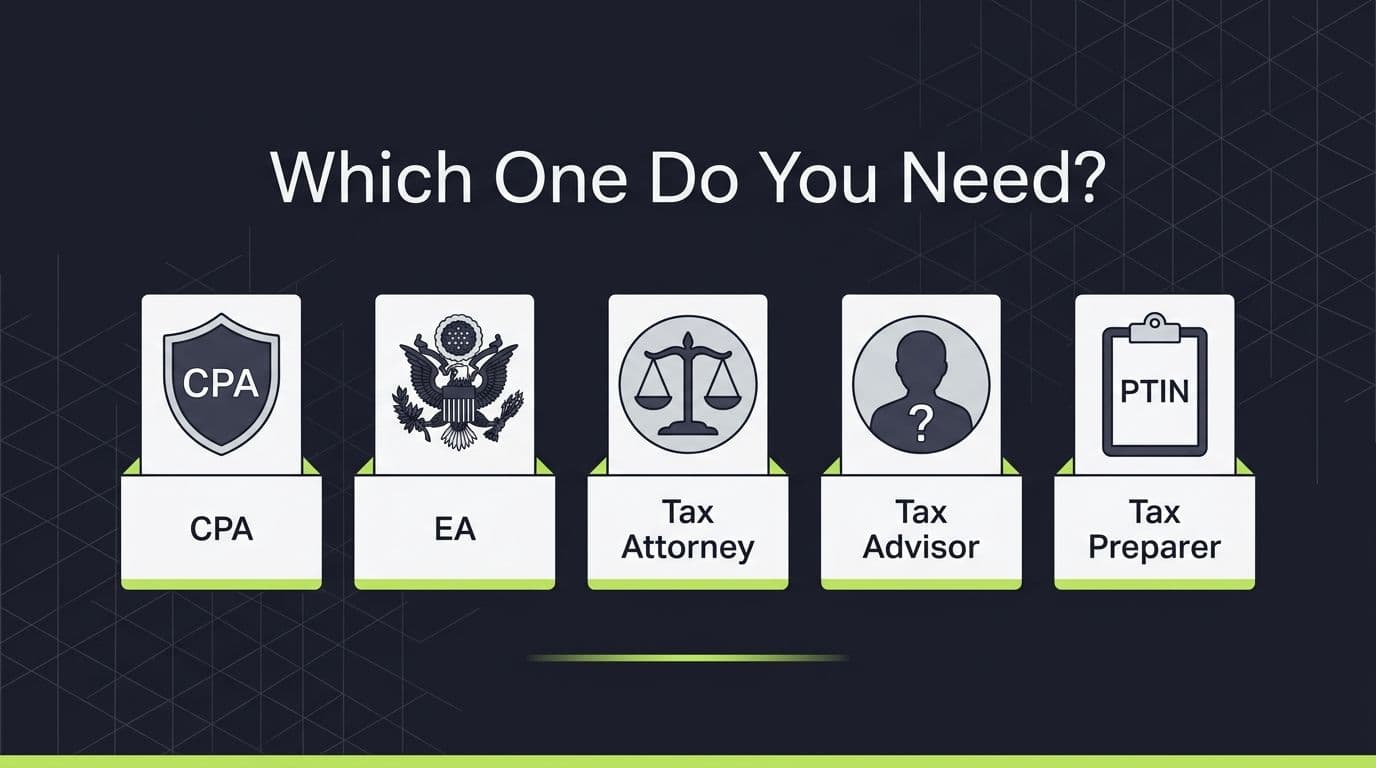
CPA, EA, tax attorney, advisor, preparer — they all sound the same but mean wildly different things. A CPA breaks down what each credential means, what each can legally do for crypto investors, and which one you actually need.

The most comprehensive crypto tax guide online, written by a CPA who files 500+ crypto returns a year. Every taxable event, form, strategy, and 2026 update.

After reviewing 200+ prior-year returns, here are the 10 warning signs your crypto tax preparer is in over their head, the questions to ask, and how to fix it.

A CPA's guide to finding the right crypto tax professional. 10 interview questions, real pricing, red flags, and when you need a CPA vs EA vs tax attorney.

A CPA's step-by-step Koinly walkthrough. Learn how to set up Koinly, avoid the 7 most common errors, and know when DIY is enough vs. when you need a pro.

Most crypto investors don't have a tax problem — they have a data problem. Here are the three most expensive mistakes we see, and how to fix them before you file.